

 Back to overview
Travel guide
The pastoralists
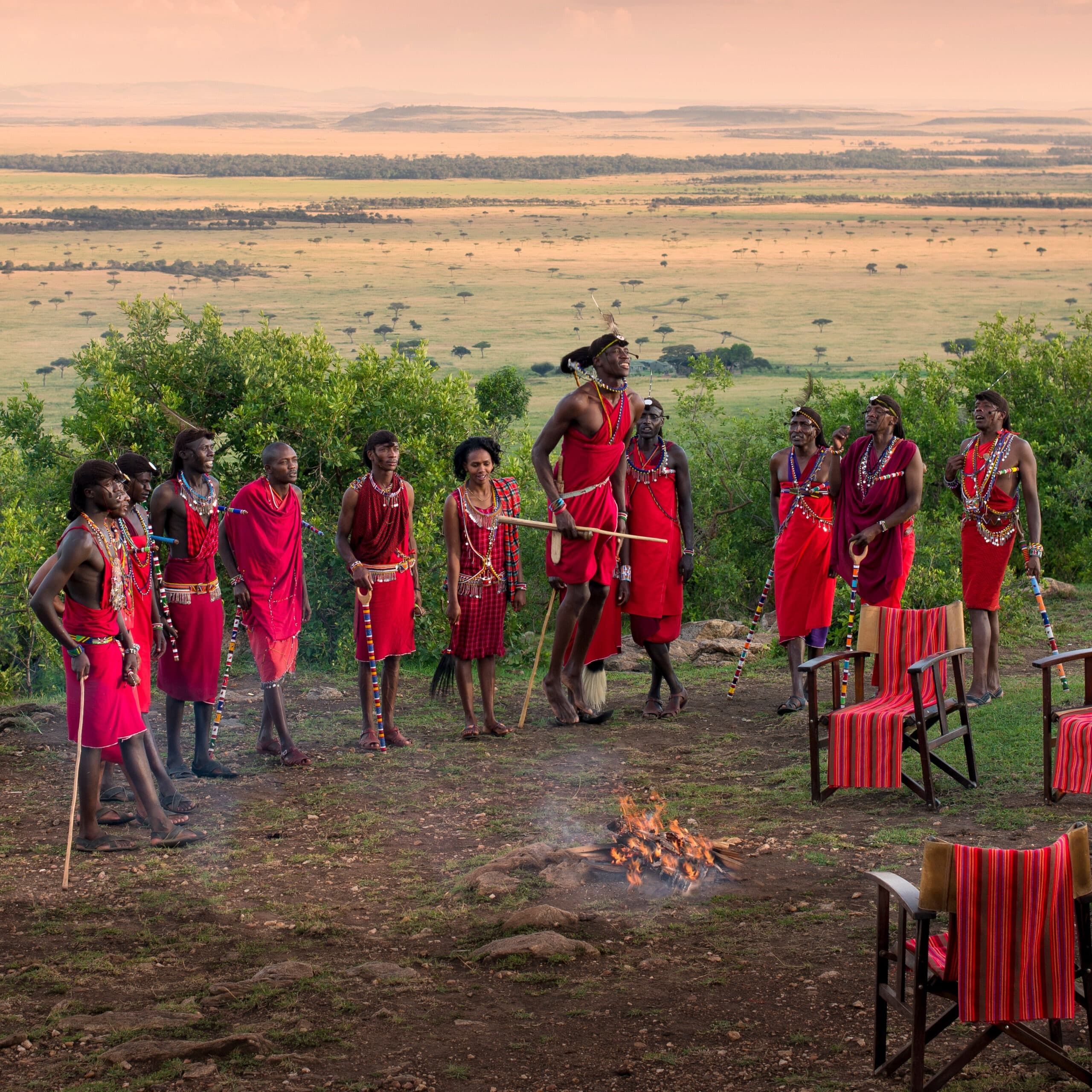
Few images say “East Africa” as instantly as a Maasai figure crossing the plains in a red shúkà. Semi-nomadic cattle herders of the Rift Valley grasslands that straddle Tanzania and Kenya, the Maasai measure wealth and standing in cattle, and organise life around the herd and the age-sets that carry each generation from childhood into elderhood.
Their culture is worn as much as it is spoken — beadwork in bold primary colours, stretched and adorned earlobes, and the adumu, the rhythmic jumping dance, each detail signalling age, status and community. Meeting the Maasai on their own terms, in their own settlements, is one of the quieter privileges of travelling here.

The last foragers
Around the shores of Lake Eyasi live the Hadzabe, one of the last hunter-gatherer societies on Earth. They keep no cattle and plant no crops; instead they read the bush — tracking game with bow and arrow, gathering tubers, berries and wild honey, and moving camp as the seasons and the animals dictate.
Their language is unlike any other, threaded with distinctive clicks and, as far as linguists can tell, related to no living tongue. To spend a dawn walking with Hadzabe hunters is to glimpse a way of living that predates farming itself — patient, exact, and astonishingly light on the land.
The metalworkers
Neighbours to the Hadzabe, the Datoga are pastoralists too, but they are best known across the region as gifted blacksmiths. Working brass, copper and iron over simple forges, they craft the arrowheads, bracelets and beads that circulate far beyond their own community — including, in a neat local exchange, the very arrow-tips the Hadzabe hunt with.
Reserved and self-reliant, the Datoga mark identity through fine tattooing around the eyes and distinctive beadwork, and hold to traditions of herding and craft that have changed little despite the modern world pressing at the edges of their grazing lands.

The mountain farmers
On the fertile southern and eastern slopes of Kilimanjaro live the Chagga, among Tanzania’s most established agricultural peoples. Where others follow herds, the Chagga stay put and farm — coffee and bananas beneath a canopy of shade trees, fed by an ingenious network of irrigation furrows channelled down from the mountain’s snowmelt and forest streams.
That settled, industrious tradition has made the Chagga highlands one of the greenest, most productive corners of the country — and a striking contrast, only a few hours’ drive away, to the open plains of the Maasai and the foraging grounds of the Hadzabe.