
Experience — Primates
One hour, by permit, in the company of a habituated mountain gorilla family. A profoundly affecting encounter with one of our species' closest relatives, and one of the most direct cases on the continent of tourism revenue underwriting a species' survival.
What it is
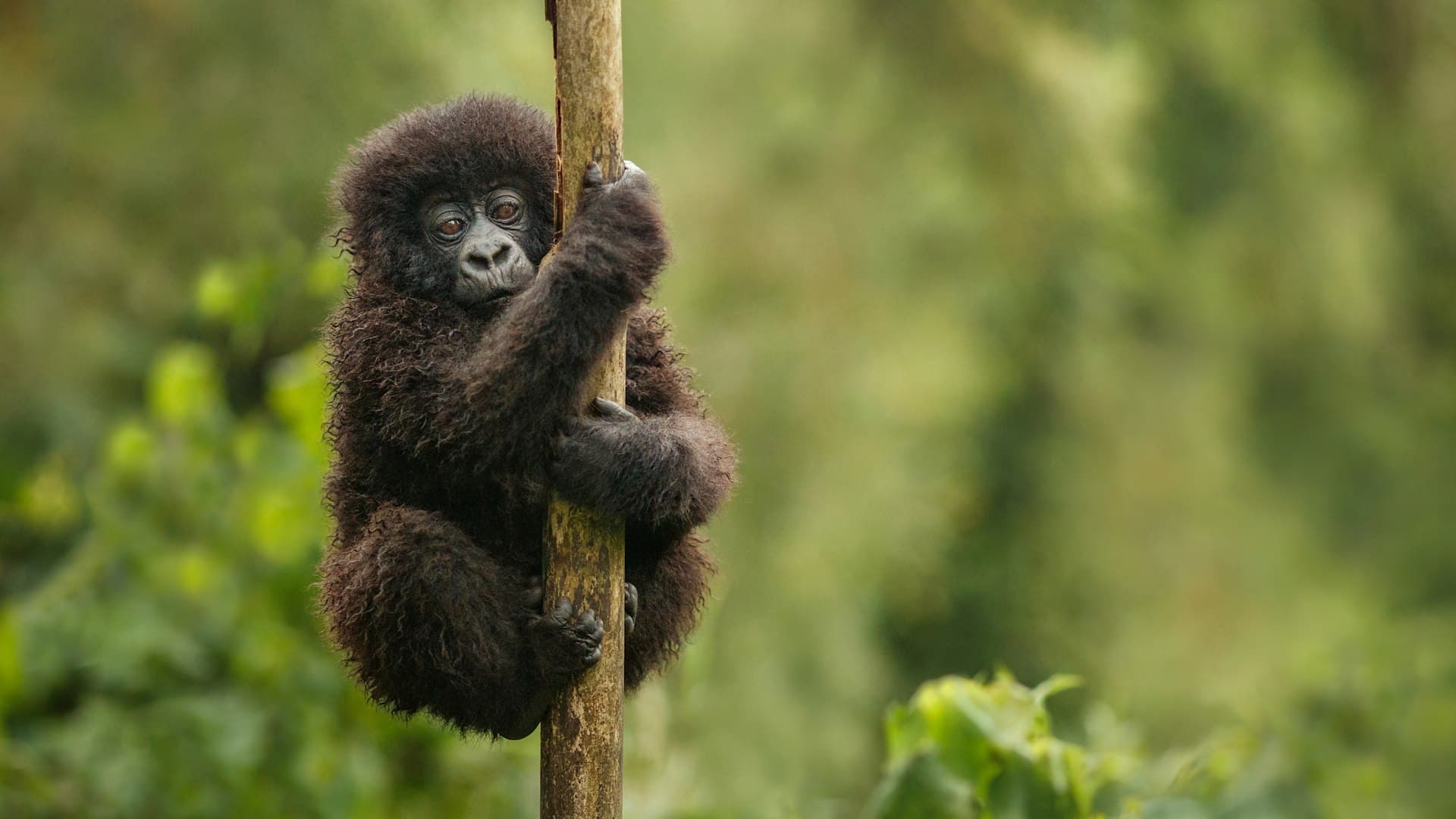
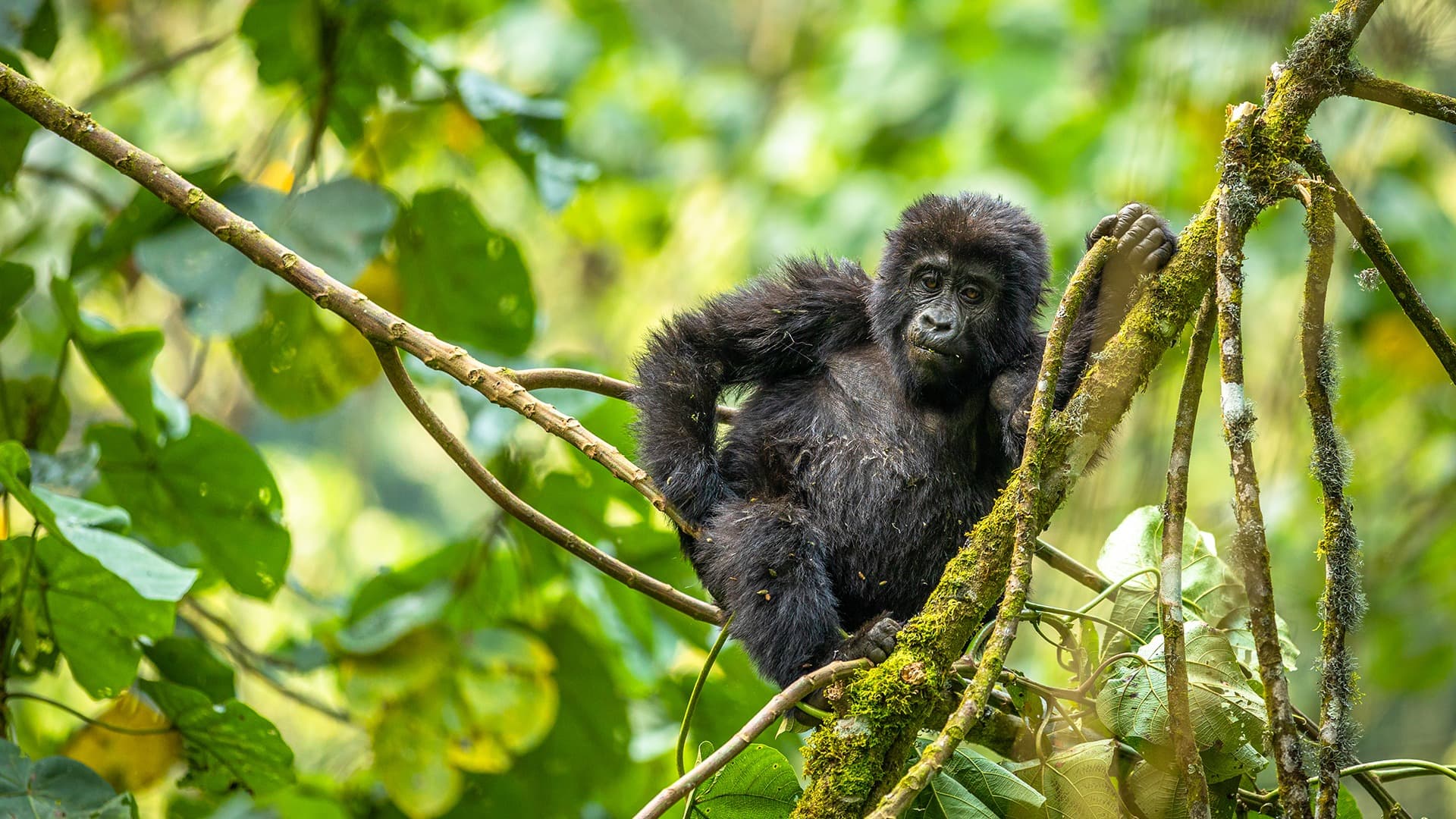
Mountain gorillas live in only three places on earth — the Virunga volcanoes shared by Rwanda, Uganda and the Democratic Republic of the Congo, and Uganda's Bwindi Impenetrable Forest. Trekking is by permit only, in groups of no more than eight visitors per gorilla family, accompanied by armed rangers and trackers, with the encounter itself limited to one strictly observed hour. The rules exist because they have worked — the population has risen slowly but steadily from a low of a few hundred individuals in the late twentieth century.
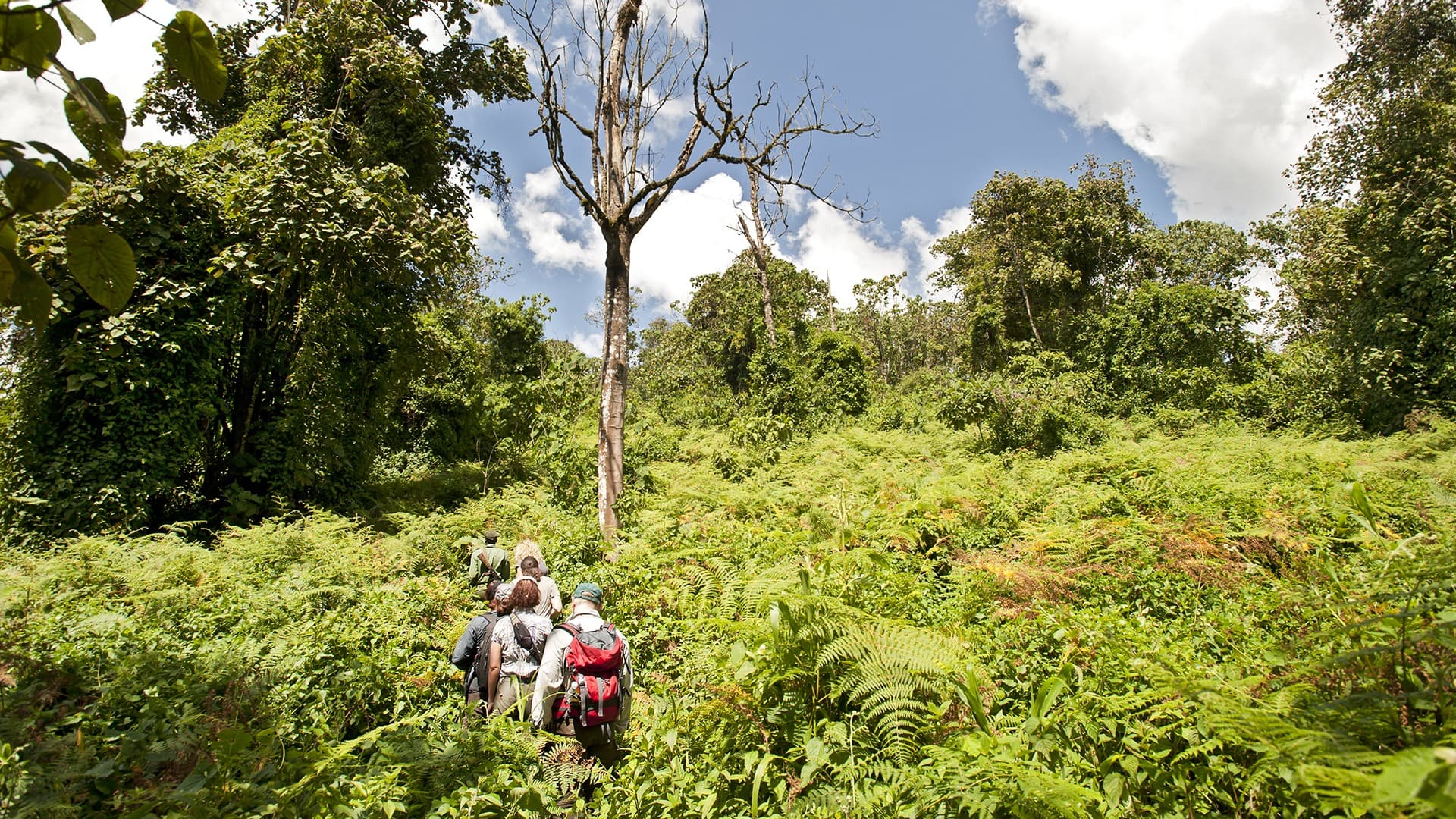
The trek itself can take anything from an hour to most of a day depending on where the family has moved. The forest is dense, the slopes are steep, and the weather can be wet. The moment of encounter — a silverback at fifteen paces, a mother grooming an infant within reach — is what almost every visitor describes as life-changing.
Where to do it
The most polished version. Permits are US$1,500 per person per trek and treks tend to be shorter — gorilla families live close to the road heads. A meaningful proportion of the permit fee goes directly into conservation.
The largest wild population and the most committed experience. Treks are typically longer and more demanding, but the forest itself is mythic, and permits are less expensive than Rwanda's.
The Ugandan side of the Virungas. Fewer habituated families, fewer visitors, and the chance of a side encounter with the rare golden monkey.
Practicalities
Permits should be secured months in advance — the daily allocation is small and the demand is consistent. Visitors must be at least fifteen years old. Anyone with a cold, fever or stomach upset will not be allowed to trek, because gorillas share enough of our DNA to catch what we have. Hands should be washed before approach, faces masked at the recommendation of the trackers, and a minimum distance maintained throughout. Carry rain layers, gaiters, and a porter — locally hired, locally paid — to give a job and lighten your load.
Trekking permits should be combined, where possible, with time at Akagera or in Nyungwe Forest in Rwanda, or with chimpanzee trekking and a savannah park in Uganda, to give the trip a fuller arc.
Countries to visit
Need to know
Permit — Rwanda
USD 1,500 per trek (Volcanoes NP)
Permit — Uganda
USD 800 per trek (Bwindi / Mgahinga); USD 1,500 habituation experience
Group size
Max 8 visitors per gorilla family
Encounter time
Strictly limited to 1 hour with the family
Minimum age
15 years
Trek length
1–7 hours each way (Rwanda) / 2–8 hours (Bwindi)
Fitness required
Moderate — sustained walking, steep forest, often wet
Required if unwell
Anyone with cold/flu/stomach symptoms is excluded
Best time
June–September & December–February (drier trails)
Frequently asked
It is well-managed. Gorilla families are habituated and accustomed to short, controlled human visits. Armed rangers accompany every group. The most common complaints are nettle stings and slippery descents — both are mitigated by gaiters, gloves, and a porter.