

Experience — The wildlife spectacle
A thousand-mile circuit walked, year after year, by close to two million wildebeest, zebra and gazelle. The world's largest overland mammal movement, and the central event of the East African calendar.
What it is
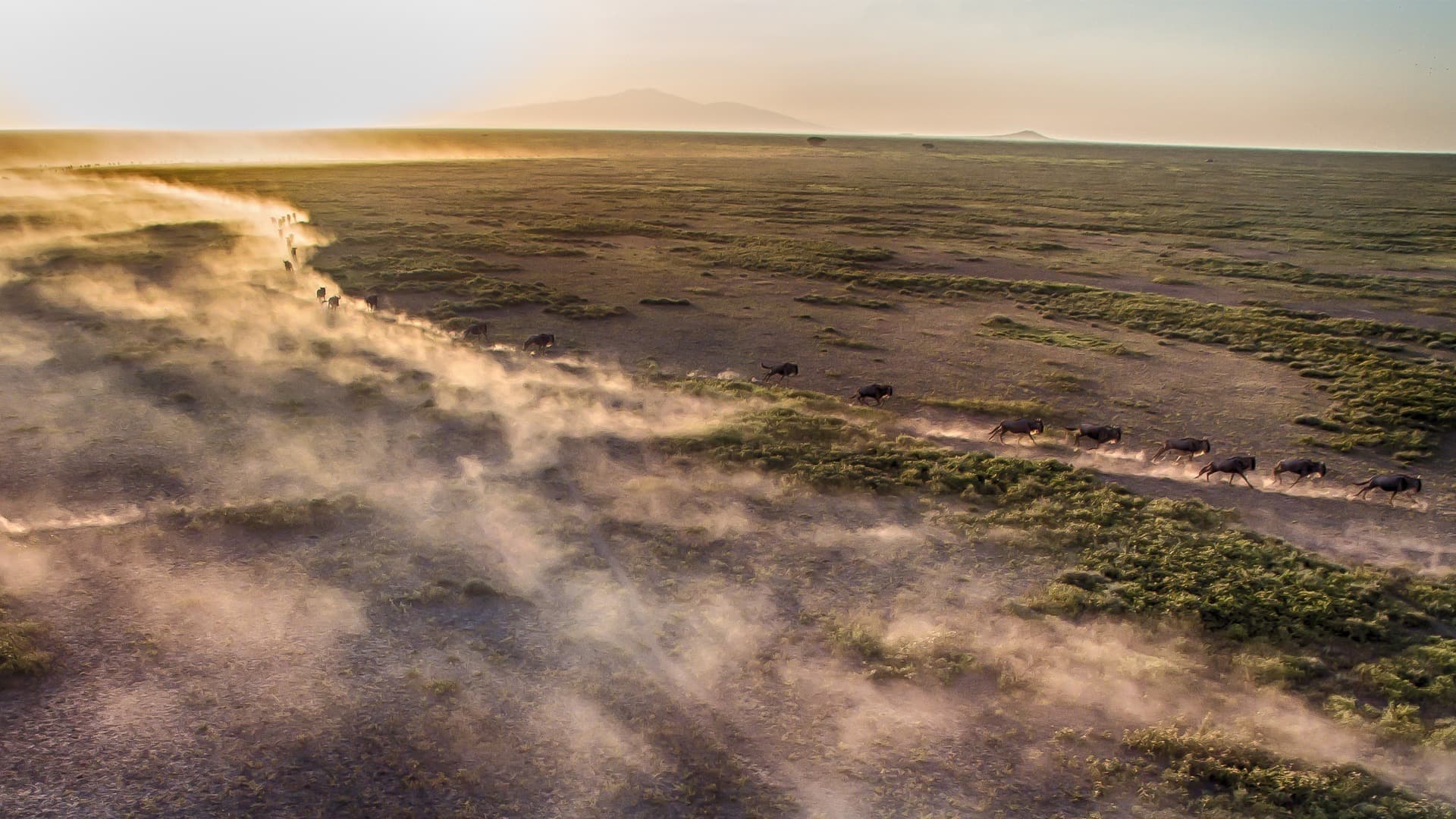
The Great Migration is an annual, broadly clockwise journey of roughly 1.5 million wildebeest accompanied by hundreds of thousands of zebra and gazelle, looping between Tanzania's Serengeti and Kenya's Masai Mara in response to rainfall and grass. It is the largest sustained mammal migration on earth, and very little prepares the first-time viewer for what a moving column of three hundred thousand animals actually looks, sounds and smells like.
The famous river crossings — the dramatic, crocodile-watched plunges into the Mara and Grumeti — are only one chapter. The calving of half a million wildebeest on the southern Serengeti plains in February is another. The long, slow rut on the central plains is another still.
The calendar
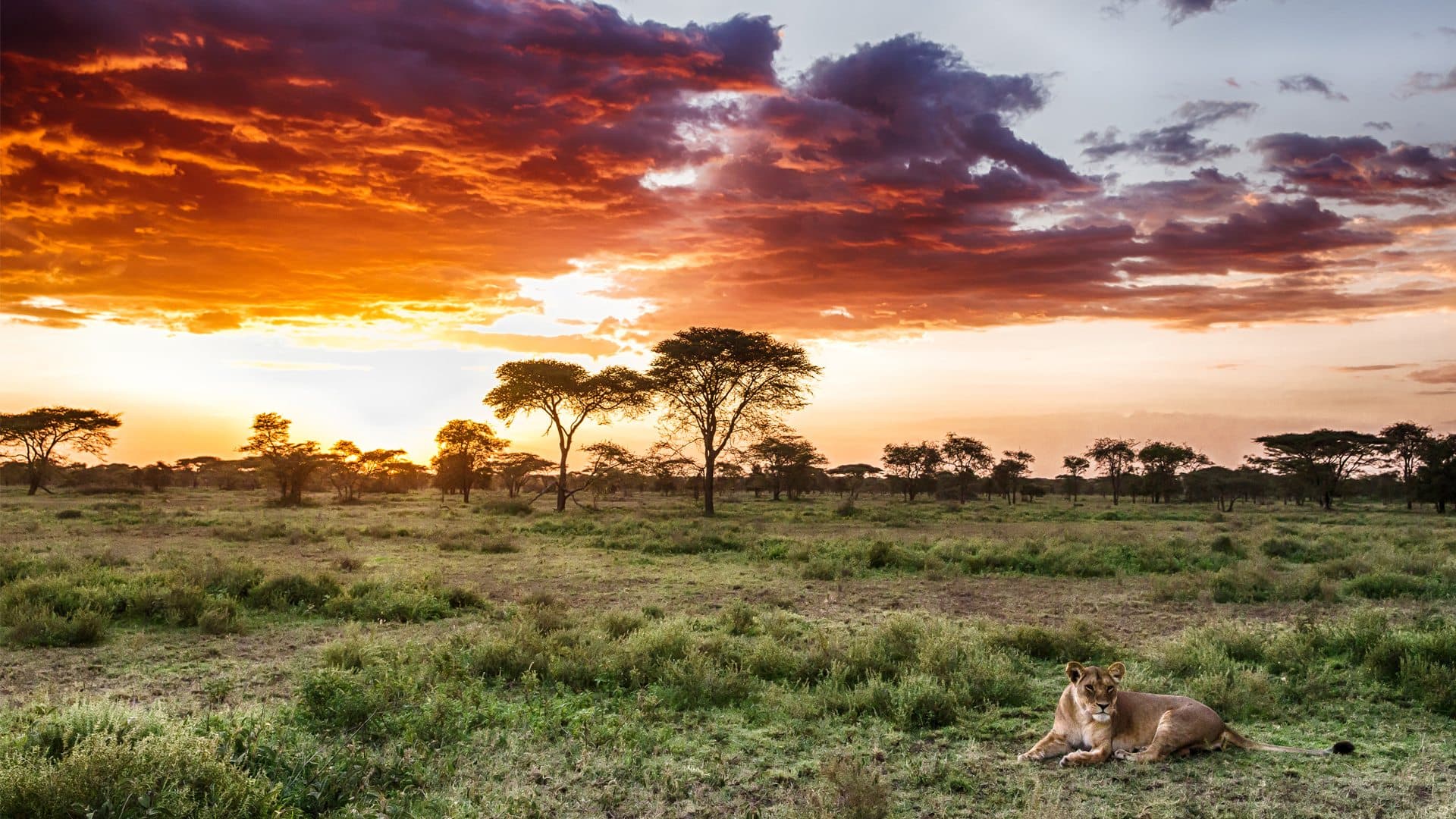
Calving on the short-grass plains of the southern Serengeti (Ndutu region). Predators in numbers; arguably the best month of the year for game.
The long rains. Herds move north and west, dispersing into the central Serengeti.
The Grumeti crossings in the western corridor — wildebeest negotiate the river and the resident crocodile population.
The Mara River crossings between the northern Serengeti and Kenya's Masai Mara. The dramatic photographs come from here.
The short rains bring the herds south again, drifting back to the calving grounds for the cycle to begin once more.
How to see it well
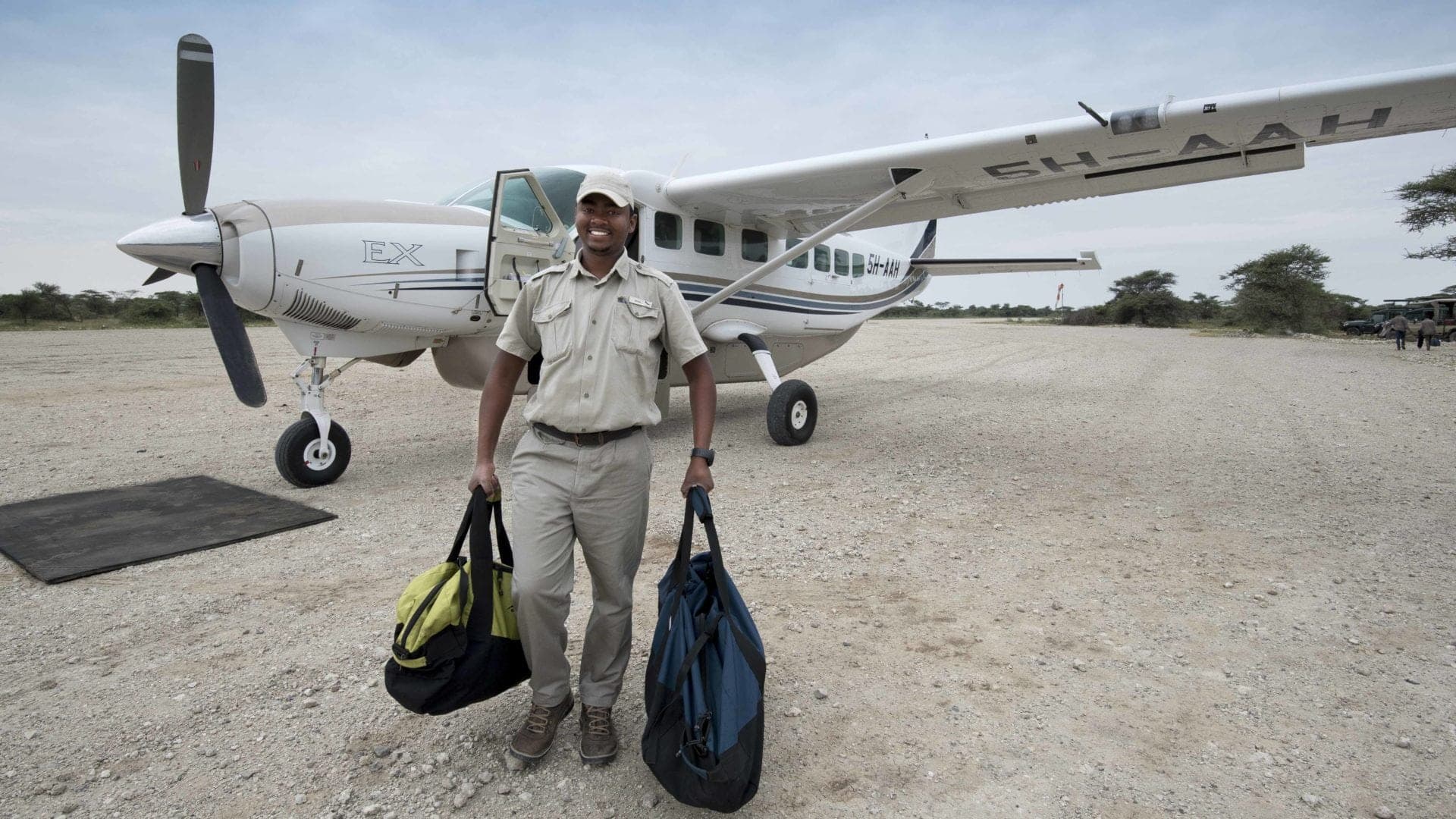
Because the herds move, the most considered way to follow them is from a mobile tented camp that relocates two or three times a year to match the calendar. The other option is to choose a permanent camp in the right region for your dates: Ndutu for February calving, the Mara for August crossings, the western corridor for the Grumeti.
A note on crowds: the northern Serengeti and the Masai Mara in August and September are the busiest places on the safari map. The crossings remain spectacular; the road traffic, less so. Travellers wanting the spectacle with fewer vehicles often choose the western Serengeti in June, the Mara conservancies in September, or the calving season in February.
Countries to visit
Need to know
Calving
January – March (southern Serengeti, Ndutu)
Long rains
April – May — herds disperse north/west
Grumeti crossings
June – early July (western Serengeti)
Mara River crossings
Late July – October
Return south
November – December (short rains)
Herd size
~1.5 million wildebeest plus 200,000+ zebra
Distance covered
~1,000 km (clockwise loop)
How to follow
Mobile camp recommended over a fixed lodge
Crowding
Mara conservancies cap vehicles; the public reserve does not
Frequently asked
There is no fixed date. Crossings typically begin in late July as the herds reach the Mara River, then occur sporadically through August, September and into October. Lower-rainfall years push the timing later; higher-rainfall years bring crossings earlier.