
Experience — Above
Africa holds some of the darkest skies left on earth. Spend a night out — on a salt pan, on a raised platform under a thatch of stars, on a rooftop above the desert — and the sky becomes the most memorable wildlife of the trip.
What it is
Almost every safari country featured on this site sits under a Bortle class 1 or 2 sky — the kind of sky where the Milky Way casts a shadow, the southern Cross sits high overhead, and the eye eventually picks out Magellanic Clouds floating like spilled milk. The combination of remote camps, low artificial light, dry desert air, and the southern hemisphere's spectacularly dense star fields makes the African night sky a draw in its own right.
"Stargazing" on a safari takes several forms. The simplest is a deck or fire-pit hour after dinner with a guide who knows the constellations. The more committed forms are sleep-outs — raised platforms or open-air four-poster beds in the bush, with mosquito netting and a charged radio; or salt-pan camp-outs in Botswana, where you sleep on a bedroll on the dry crust, two hundred kilometres from the nearest light.
Where to do it
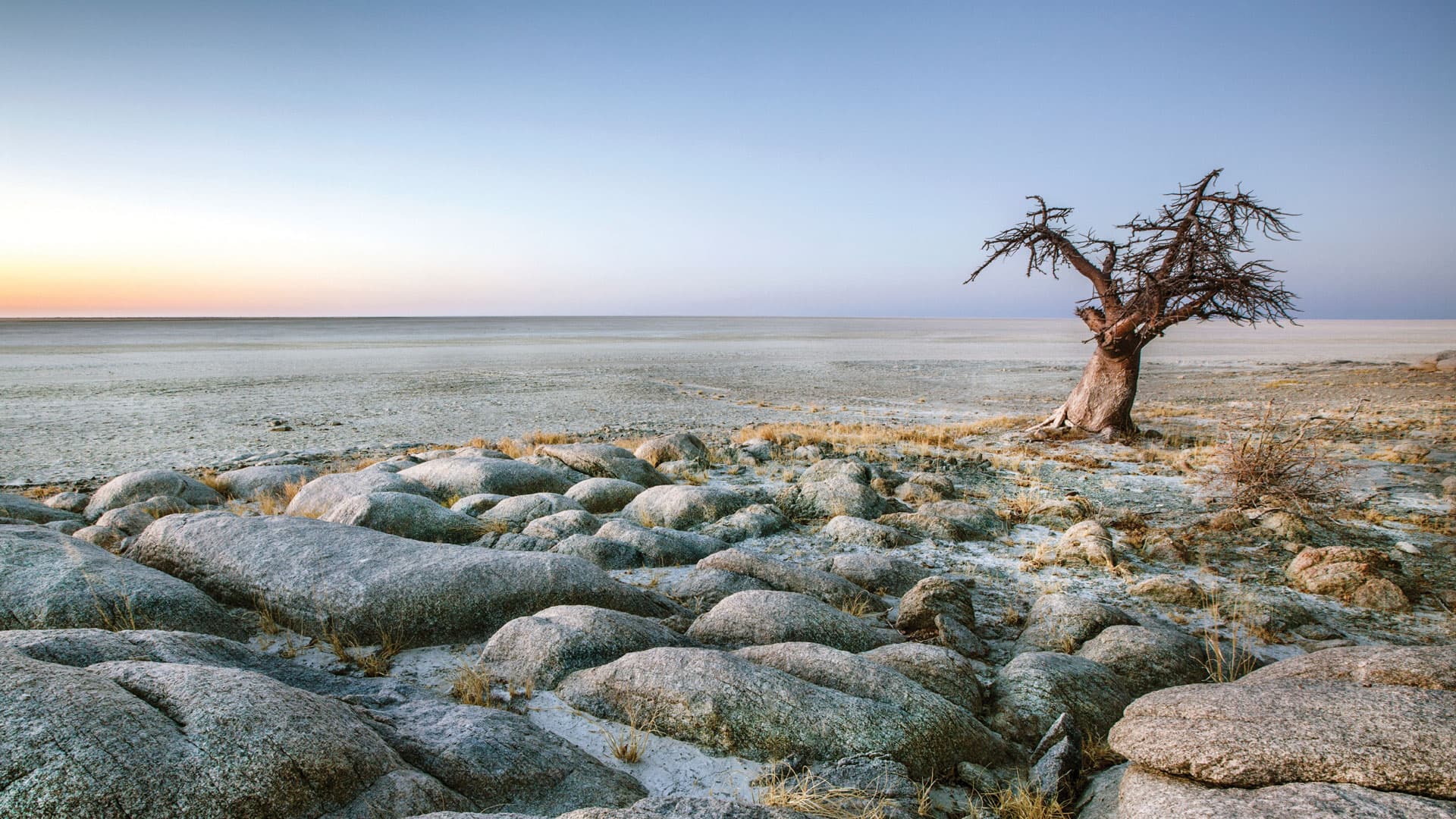
One of the largest salt pans on earth. The pan crust is so flat and the sky so unobstructed that operators offer overnight bedroll sleep-outs in the dry season — a horizon-to-horizon dome of stars with the silence to match.
Vast, lightly inhabited, dark in every direction. Several camps run dedicated sky programmes, with guided astronomy from the deck after dinner.
Raised platforms tucked into the bush near permanent camps in Linyanti, the Okavango and Hwange. You sleep under nothing but mosquito netting and starlight, with a charged radio and a guide on call.
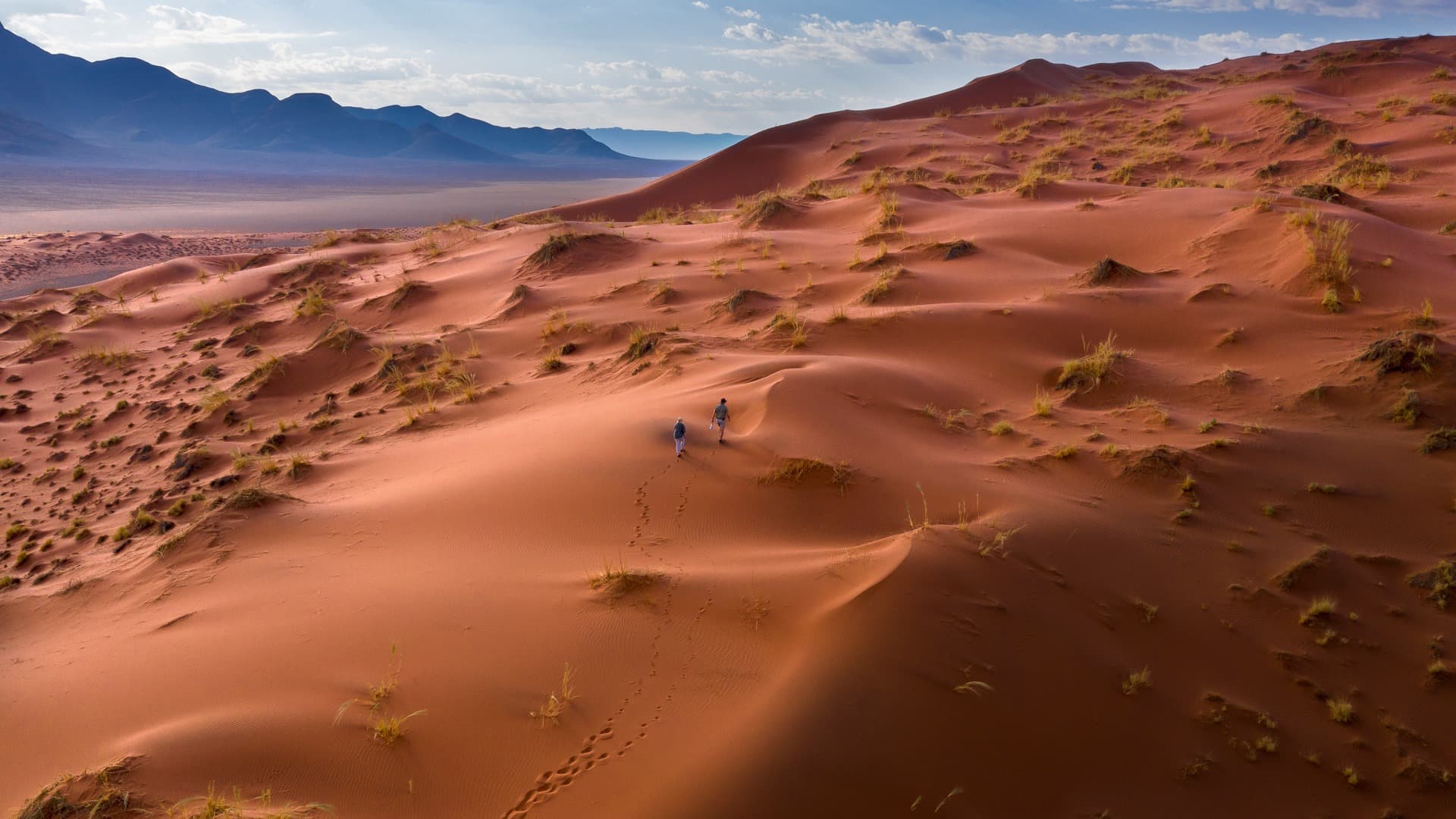
The NamibRand is one of the few certified International Dark Sky Reserves in Africa. Sleep on the rooftop of your suite, or join a star tour with a desert astronomer working a Celestron telescope.
Few people, dry air, and no light pollution for hundreds of kilometres. Some of the best naked-eye observing on earth.
The conservancies of Laikipia, Samburu and the Mathew's Range run star bed programmes — open-air platforms with views over the Ewaso Ng'iro River.
The Karoo desert plateau is one of the southern hemisphere's premier observing regions; Tswalu and several Karoo lodges offer guided sky sessions.
The Luangwa Valley sits under a particularly inky sky in the dry months. Walking-trail fly camps frequently include a fireside guide who can name the stars overhead.
The migration camps move with the herds and pitch in genuinely remote country. A clear night on the Serengeti plain is hard to forget.
Practicalities
A star bed or salt-pan sleep-out is usually a one-night addition to a longer stay, weather permitting. Beds are mosquito-netted, kitted with a warm duvet (desert nights are cold even in summer), and within radio reach of camp. You will typically be escorted out before sunset, given dinner by the bed, and brought back in for breakfast in the morning.
For dedicated astronomy, the best months are the cooler dry-season nights — May to September in southern Africa — when air clarity is highest. New-moon weeks are the obvious targets.
Countries to visit