

Experience — On foot
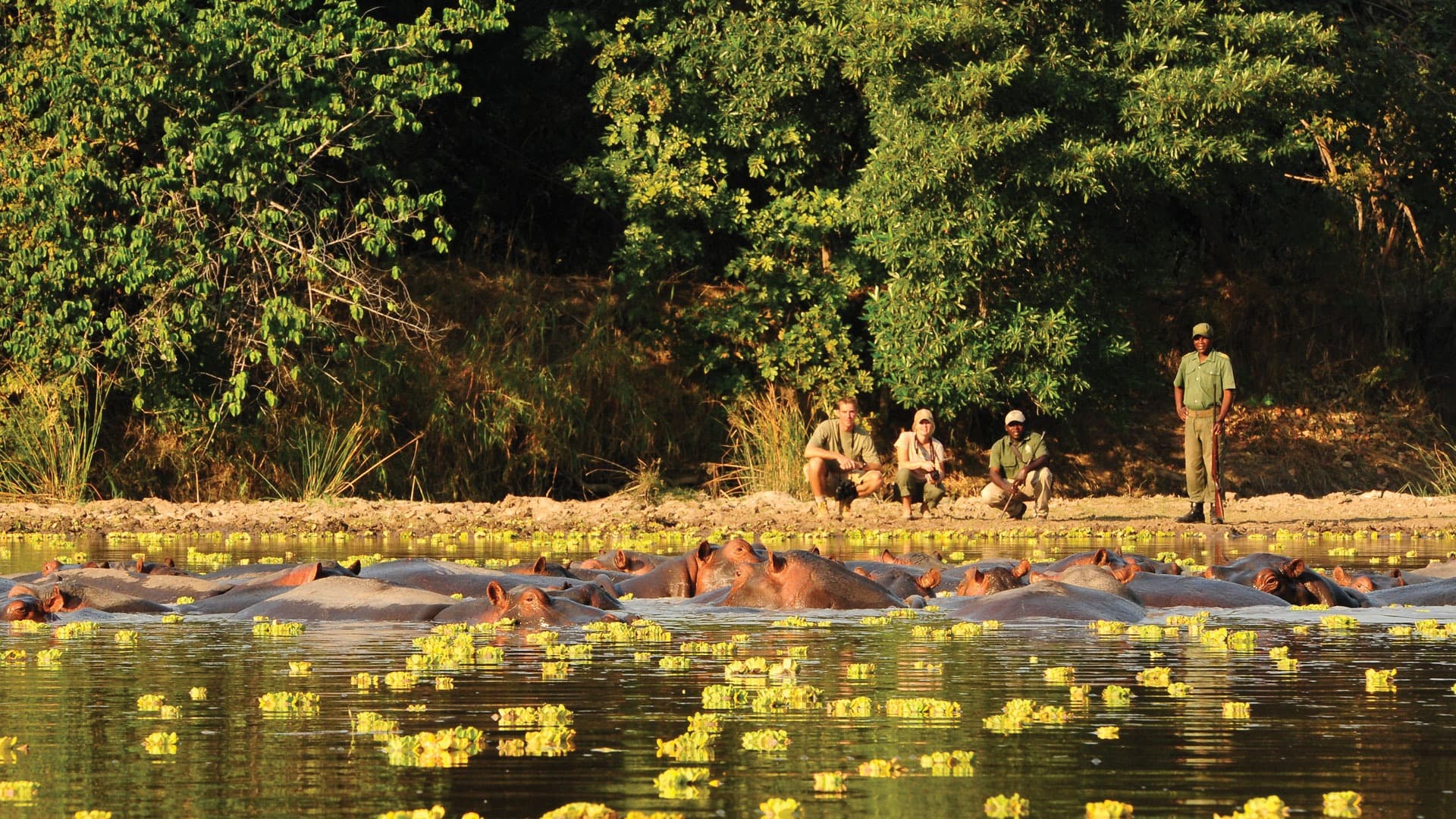
The thinking traveller's safari. No engine, no roof, no other vehicles — only an armed guide, a tracker, a notebook, and three or four hours of paying attention to what the bush actually looks like.
What it is
The walking safari was invented in Zambia's Luangwa Valley in the 1950s and has been refined for seventy years. It is the antidote to the vehicle safari — slower, quieter, and unmistakably on the animal's terms rather than your own. You walk in single file behind an armed scout, learn to read tracks and scat, and notice the smaller things you miss from a Land Cruiser: dung beetles, ant lions, the difference between elephant and buffalo paths, the particular trees a leopard prefers.
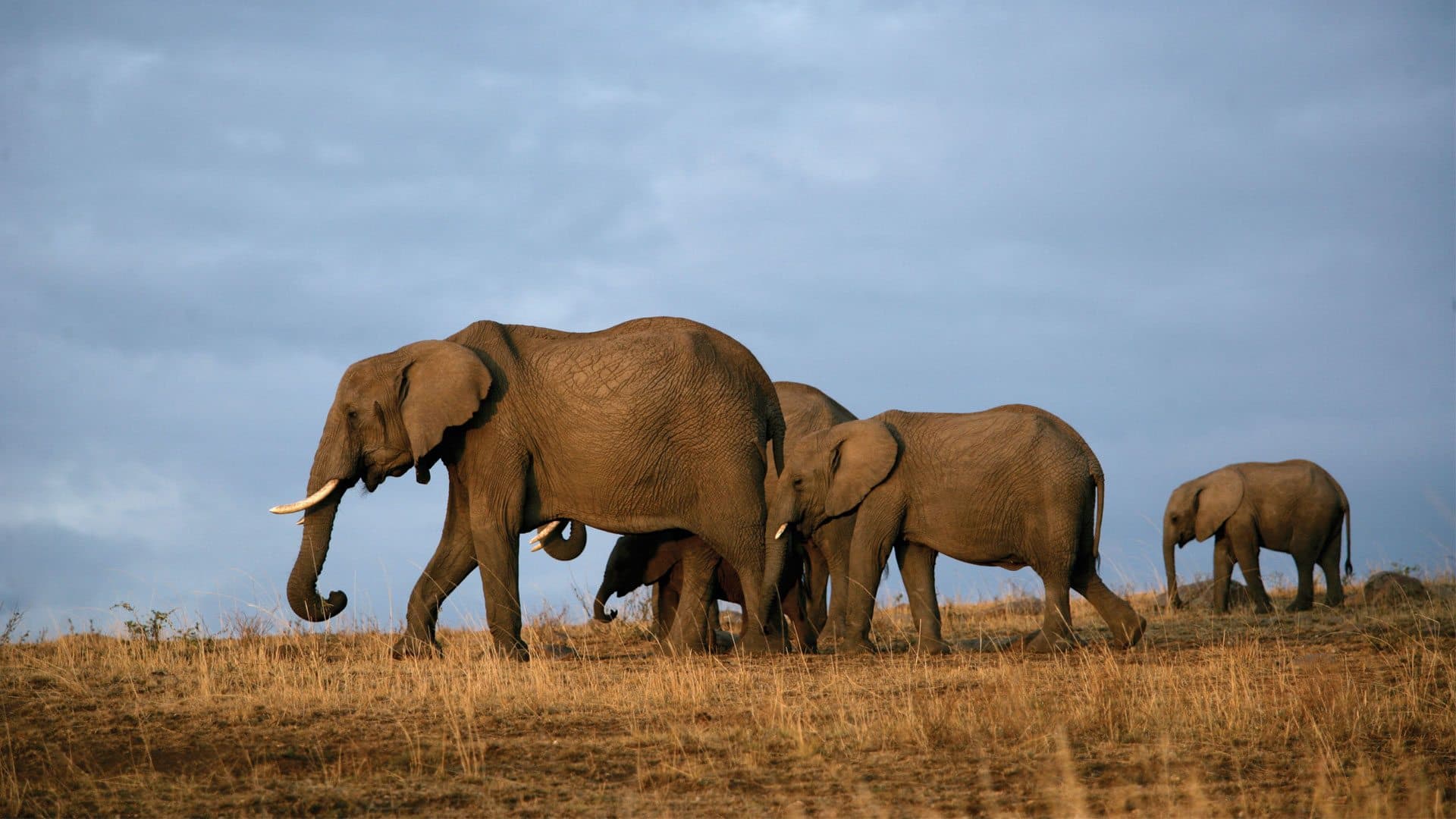
When you do encounter larger animals on foot — a giraffe at thirty paces, a herd of elephant on a riverine flat, a sleeping lion — it is bound to be an experience you remember for a very long time.
Where to do it
The home country of the discipline. Multi-day walking trails between bush camps, expert tracking, and the most leopard-rich corner of Africa.
Famously, you can walk among elephants here that have grown used to people on foot. The guiding qualifications in Zimbabwe are widely held to be the most rigorous on the continent.
Dynamic, engaging, interpretive walking on the Delta islands. Fewer vehicles, immense birdlife, and the unique pleasure of a sitatunga slipping into the papyrus.
Northern Kenya is the country's walking heartland. Conservancies built for walking, with the option of camel or horseback for variety.
The southern parks are particularly well set up for walking and fly camping, with very few other guests sharing your route.
Tracking desert black rhino on foot is one of the most demanding and rewarding walks in Africa. Dry, hot, slow, and unforgettable.
Walking trails in Sabi Sand, Phinda and others — generally a few hours from camp rather than multi-day routes, but professionally led.
The country's most remote park. Walking through astounding, unvisited landscapes.
Countries to visit