

Experience — Game drives
Lion, leopard, elephant, rhino, buffalo — the colonial-era hunters' list, since converted into the most-asked-about wildlife checklist on earth. Where to find them, and which country to do it in.
What it is
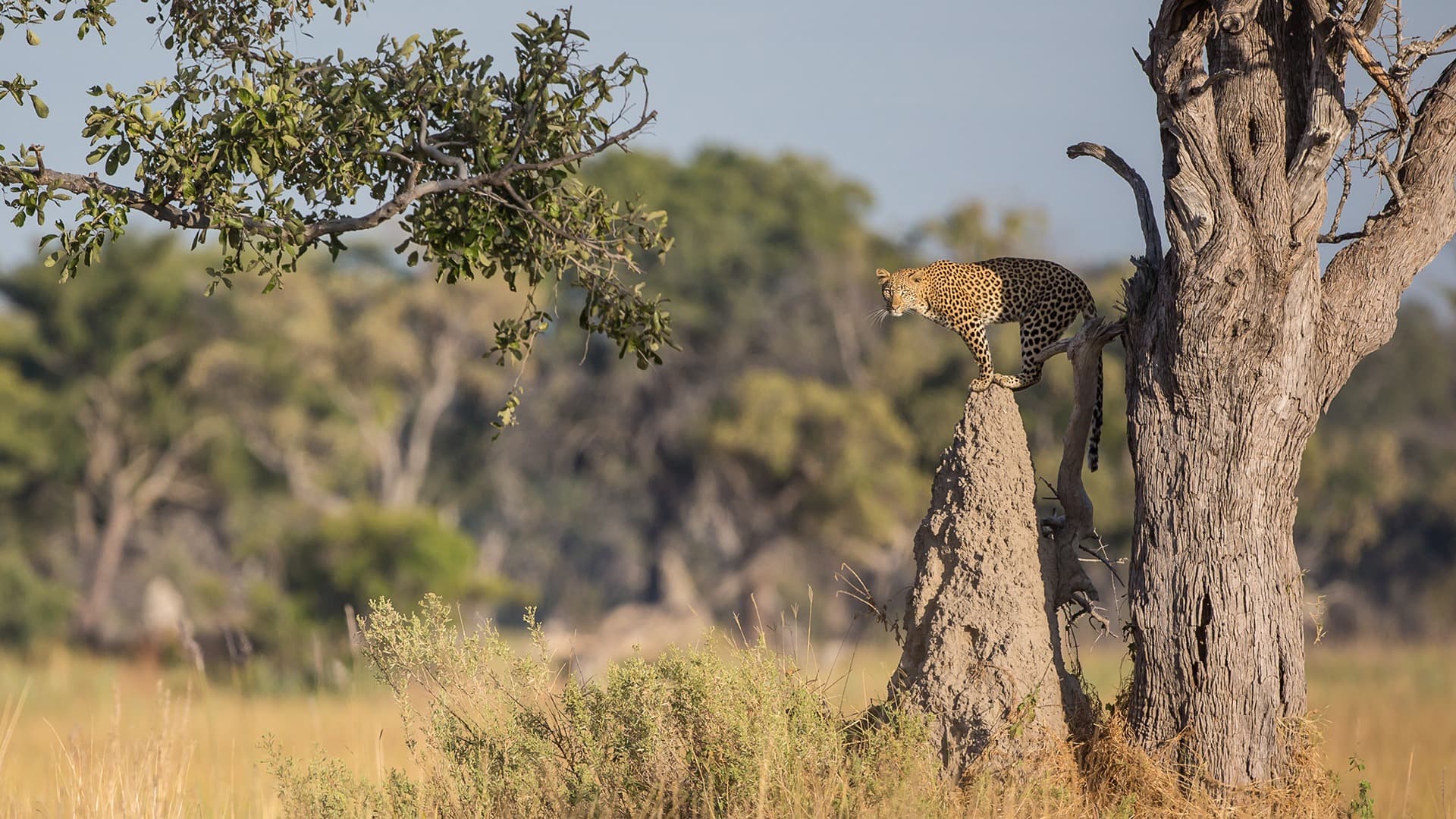
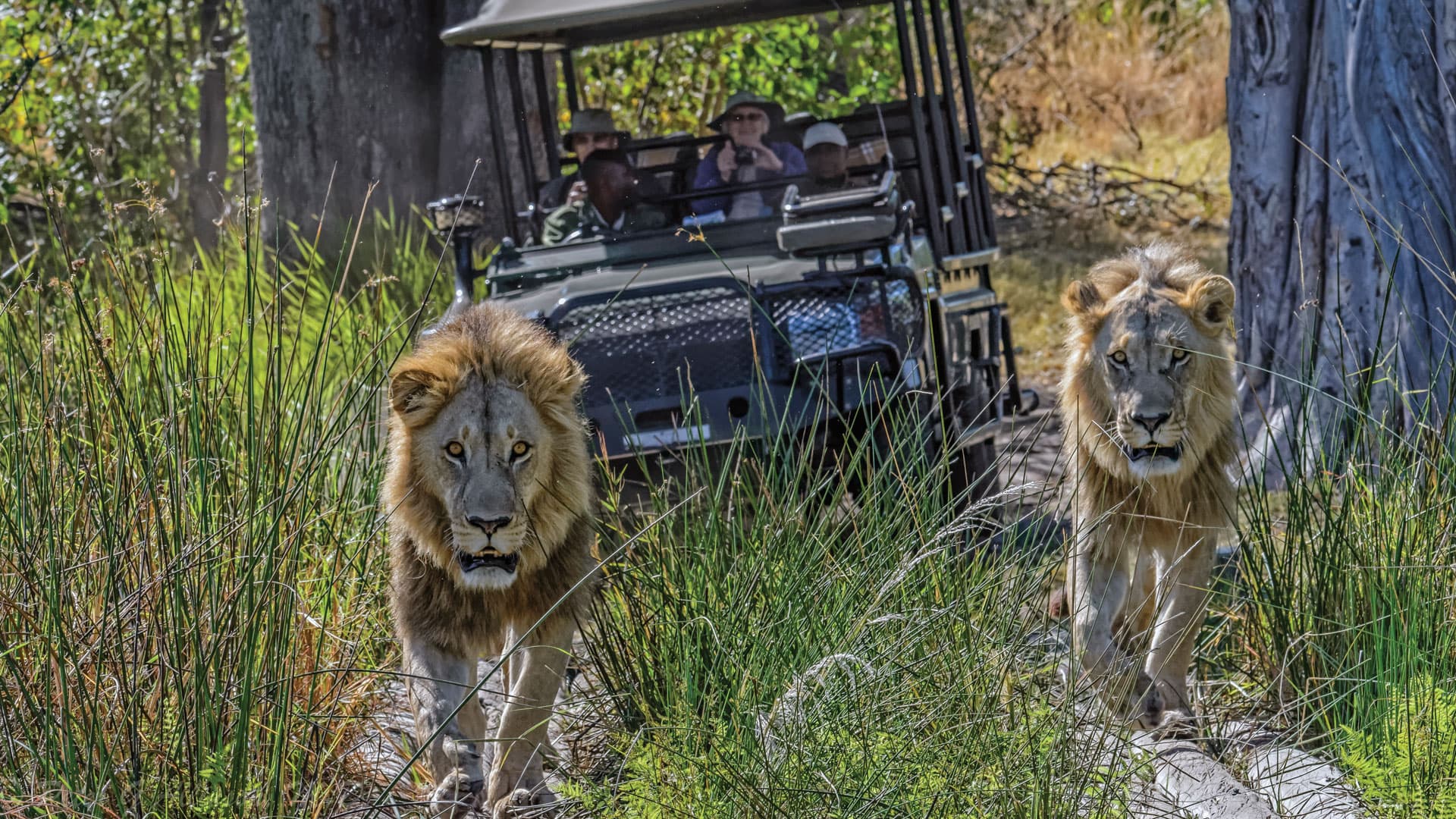
The game drive is the activity around which almost every African safari is built — usually two a day, one at first light and one before sunset, in an open four-wheel-drive, with a guide and tracker. The thrill is that wildlife is genuinely unpredictable: you read tracks, you listen for alarm calls, you stop the vehicle and stay quiet, and you watch.
The "Big Five" is a useful shorthand rather than a hierarchy. The most-asked-about animals — particularly leopards — are sometimes the hardest to find in any given country, and many of the most extraordinary sightings turn out to be of species that did not make the list (pangolin, wild dog, cheetah, honey badger).
By species
Everywhere with antelope to eat. Notable density in the Masai Mara, the Serengeti, Hwange, and the Busanga Plains in Kafue. Kalahari black-maned prides at Tswalu and the Central Kalahari.
Sabi Sand and Mala Mala (South Africa) for habituation and consistency; South Luangwa (Zambia) for the highest concentration in Africa; the Masai Mara conservancies for daytime sightings; Suyian (Kenya) for the rare melanistic leopard.
Botswana protects the largest population on earth. Hwange in Zimbabwe and Chobe in Botswana for dry-season concentrations; Amboseli in Kenya for elephant in front of Kilimanjaro; Tarangire in Tanzania for the famous family groups.
Sabi Sand, Phinda and Madikwe (South Africa); Solio and Lewa (Kenya); Damaraland for free-roaming desert black rhino (Namibia); the Matobo Hills (Zimbabwe) for tracked rhino on foot.
Everywhere they should be — the Mara, the Serengeti, Mana Pools, Hwange, the Luangwa Valley, Kruger. The most overlooked of the Five.
Countries to visit