
The Masai Mara — Lemek Conservancy, Kenya
An unfenced corner of the Greater Mara. Plains older than memory, herds that still cross the river on their own time, and a quality of silence that becomes the most memorable part of the trip.
A first glance


The place
Sometimes called the world's eighth wonder, the Masai Mara is the northern reach of the greater Serengeti–Mara ecosystem. The National Reserve covers 1,510 km² of open plains, acacia-dotted hills, and the slow brown coil of the Mara River. Around it, a patchwork of Maasai-owned conservancies adds many times that area in protected wildlife habitat — the same country, with a fraction of the vehicles.
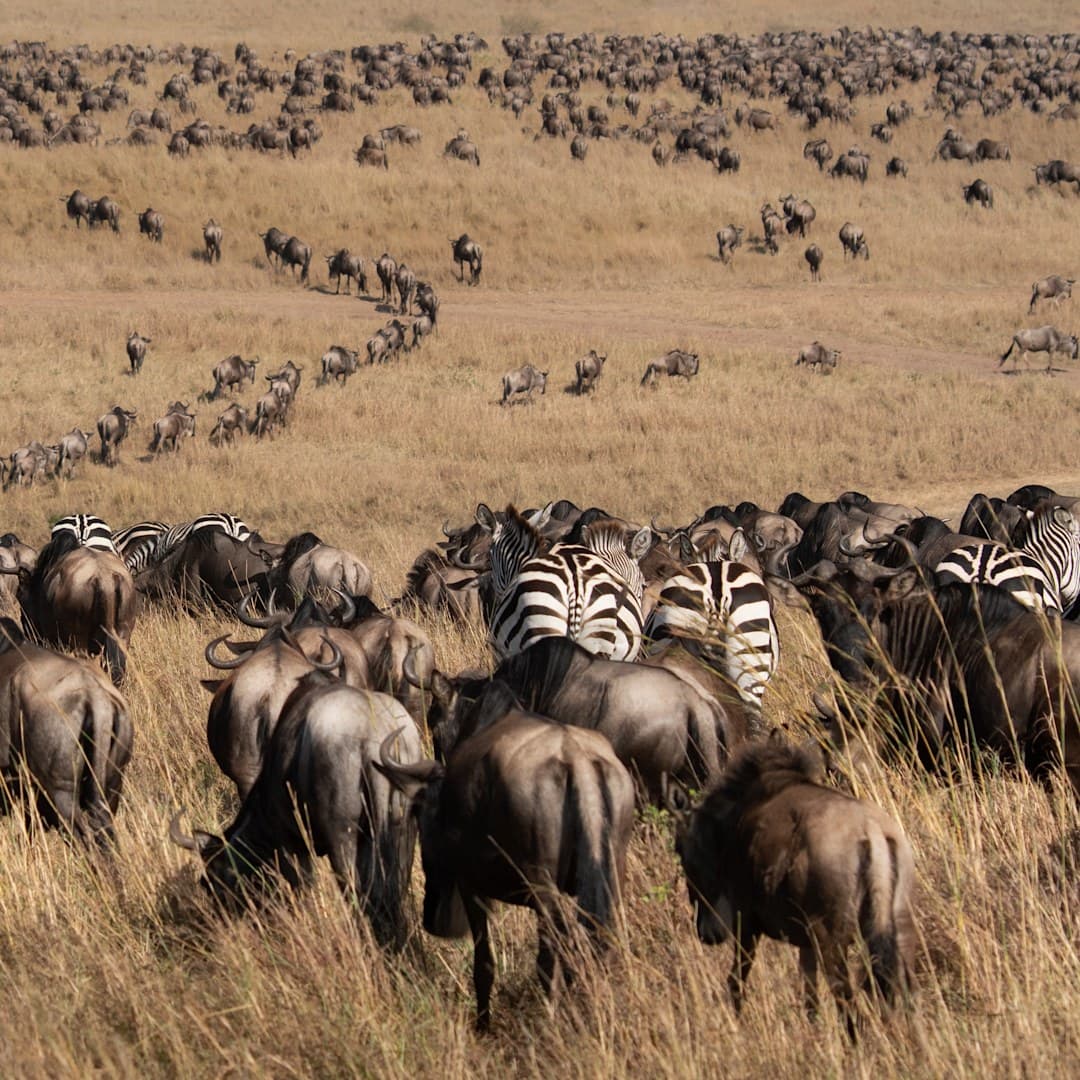
From July through October the Mara hosts the northern leg of the Great Migration: close to 1.5 million wildebeest, zebra and antelope cross the Mara River from the Serengeti in search of greener grass. Crocodiles wait. Predators follow. The crossings are extraordinary, and so is the rest of the year — calving in February, the rut in spring, the still green months when the herds have moved on and the country settles into its other quietnesses.
The reserve and its conservancies between them hold around 95 mammal species and roughly 470 birds. The Mara was the setting for the BBC's Big Cat Diary; many of the lion prides and cheetah coalitions here have been observed by researchers for generations.
A week here
Two drives a day in an open four-wheel-drive with guide and tracker. Big cats are the headline; the Mara is one of the best places on earth to see lion, leopard and cheetah in a single trip.
From late July to October the herds pile up against the Mara River and — when the moment comes — plunge across, crocodiles in the shallows.
On foot in the conservancy with an armed guide and tracker. Slower than the drive, closer to the ground, attentive to a different set of details.
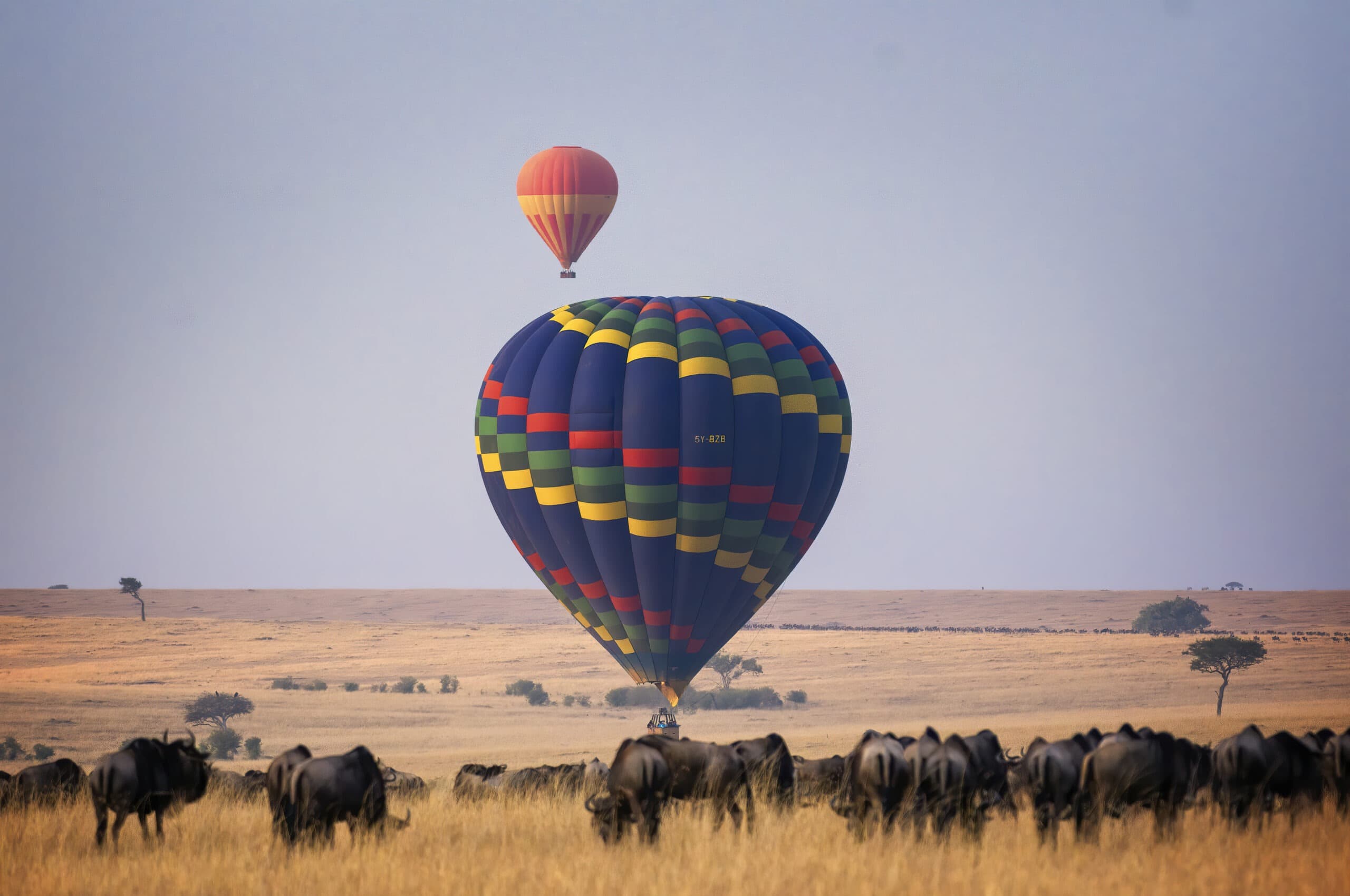
A drifting flight across the plains and grazing herds, ending with a champagne breakfast on the savanna.
Conservancy-only. Spotlit drives reveal serval, bat-eared fox, the occasional aardvark, and the nocturnal mood of the resident predators.
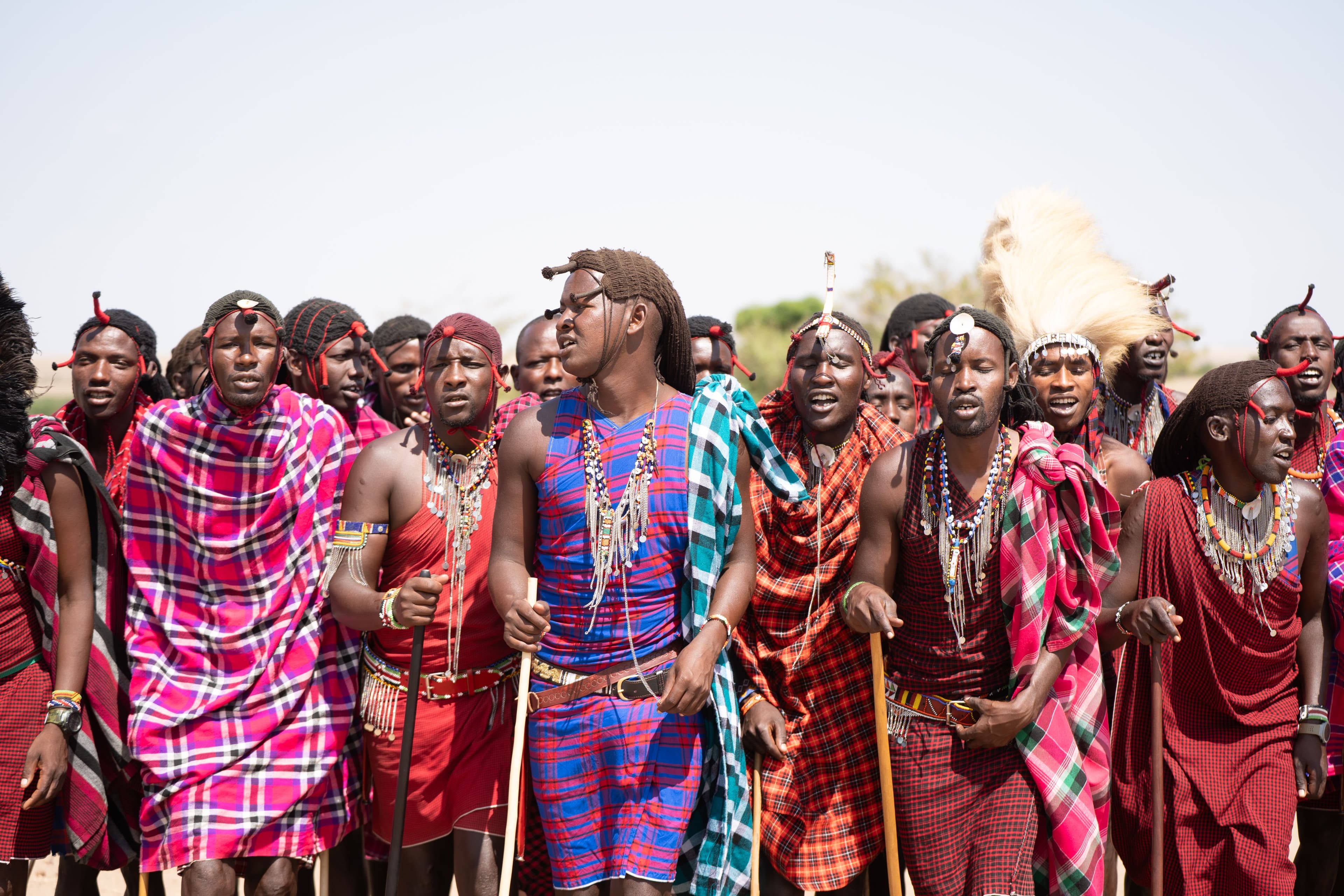
Time with the families whose land you are on — village, school and craft visits arranged with care and proper protocol, through long-standing community partnerships.
A breakfast tent under an acacia after the morning drive; a sundowner ridge at the end of the day, the plain going gold below.
A book on a deck, a slow lunch, a swim, a nap. Equally a part of the week, equally why people come back.
When to come
The Mara is a year-round destination, but the calendar shapes the trip. July through October is the dry season and the migration months — river crossings happen in this window, the grass is short and yellow, and the country is at its most concentrated. November through February is the transition — short rains, lower visitor numbers, the herds back in Tanzania. March through June is the green season — long rains, lush plains, calving among the resident antelope, fewer guests, and some of the best photography of the year.
If you can only travel in the migration months, choose a conservancy stay — same wildlife, lower vehicle density. If you can travel either side, the green and transition seasons are quietly excellent and considerably less crowded.
The conservancy
Xola sits inside the Lemek Conservancy — privately leased Maasai land where the lease itself funds community development and ecological protection. The land remains in Maasai hands; the herders, their cattle, the wildlife and the guests are part of a single, deliberately maintained balance.
Conservancies cap vehicle numbers per sighting, permit activities the public reserve does not (walking, night driving, off-road movement at the guide's discretion), and share lodge revenue with the surrounding villages — school sponsorship, clinics, water provision, scholarships. The model has been working in this corner of Kenya for two decades, and it is the reason the country still looks like itself.
Where you stay
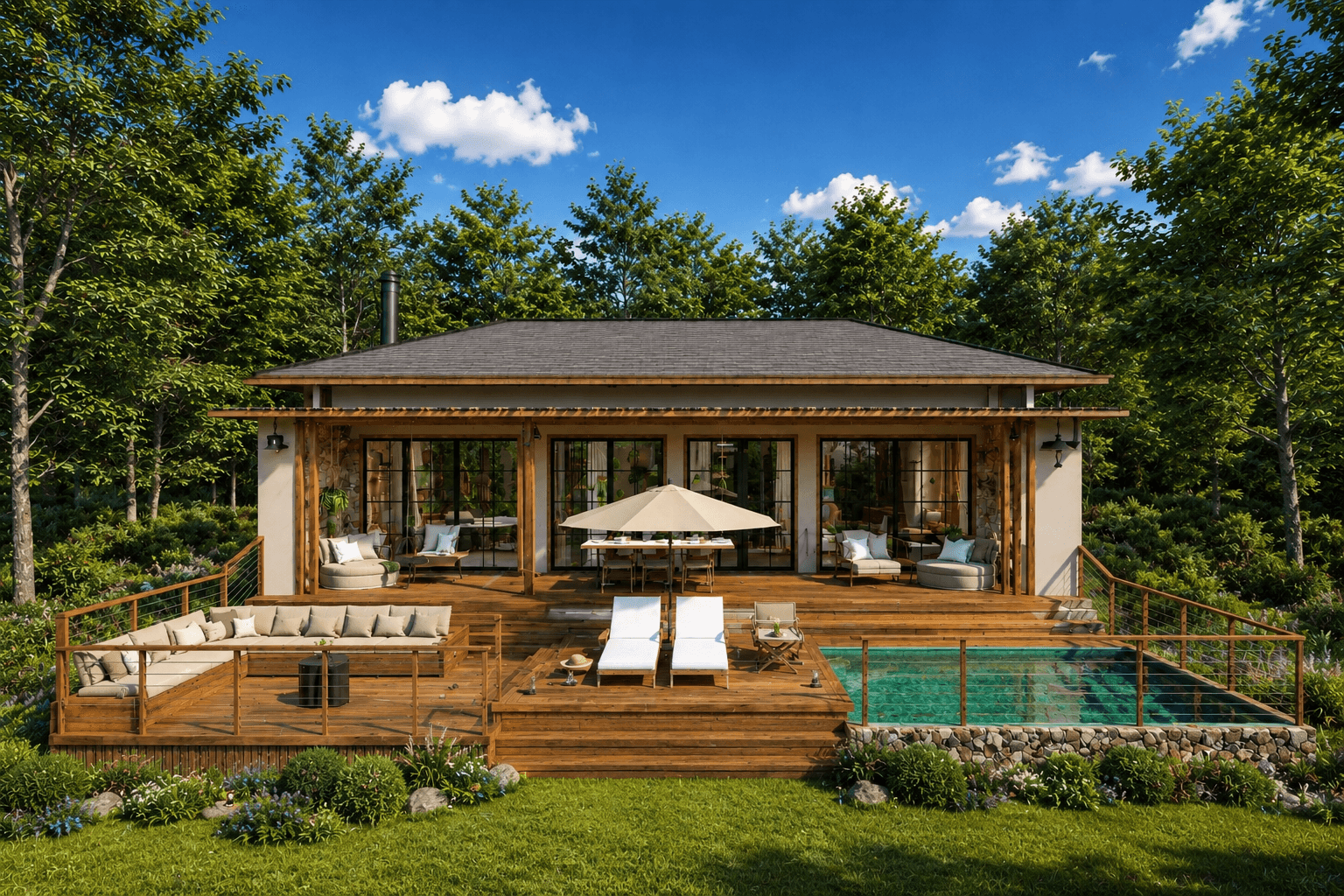
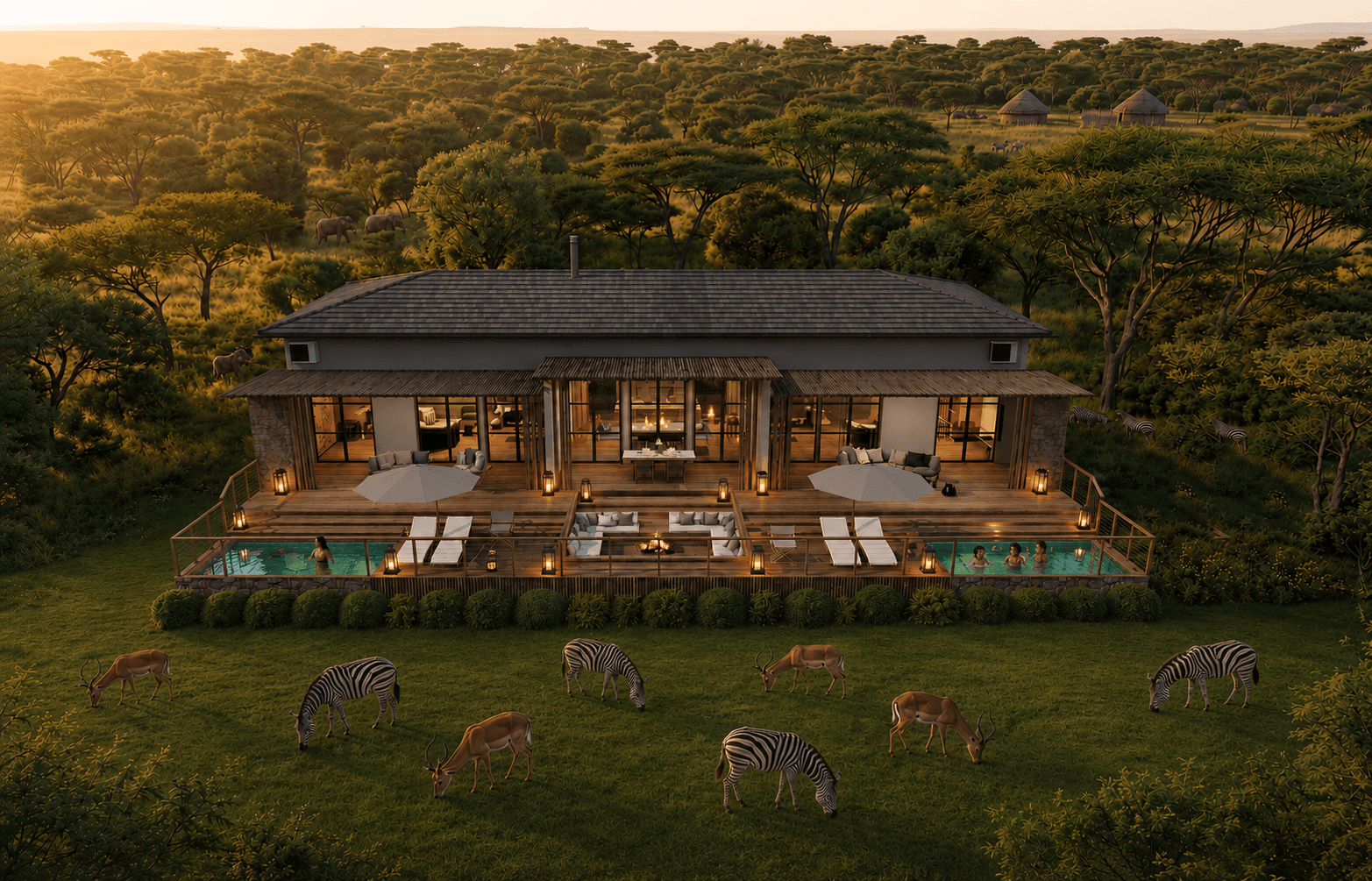
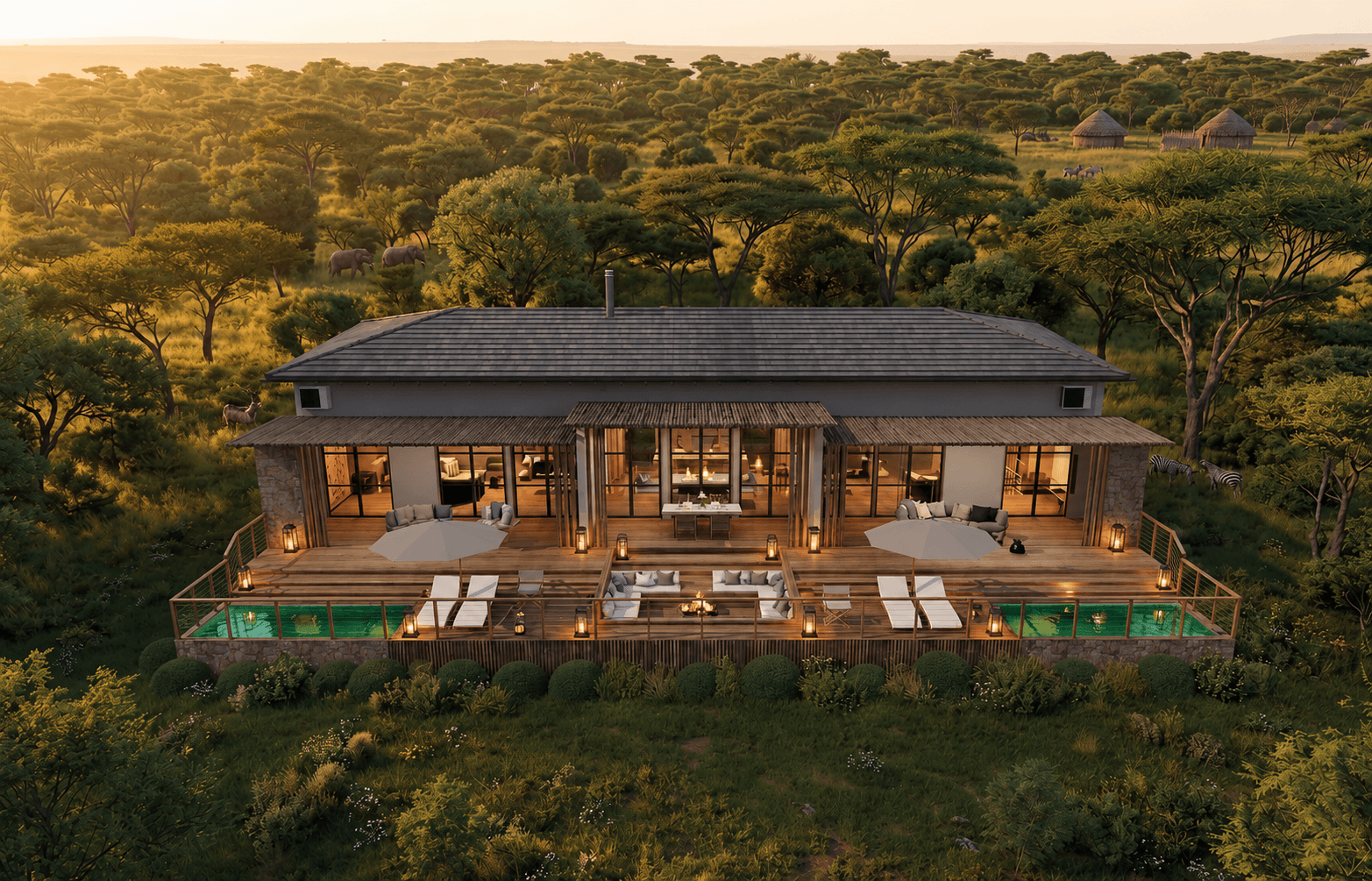
Xola is eight private villas at one quiet edge of the conservancy. The architecture is contemporary African — soft natural materials, generous indoor-outdoor flow, a calm neutral palette — and the operation is deliberately small. Eight villas, eight private vehicles, eight guides, eight butlers.
The land around the lodge is unfenced. The wildlife moves through. The safety protocols are quiet and constant, the lights are warm, and the days are arranged at the pace each guest sets.
By the numbers
The villa
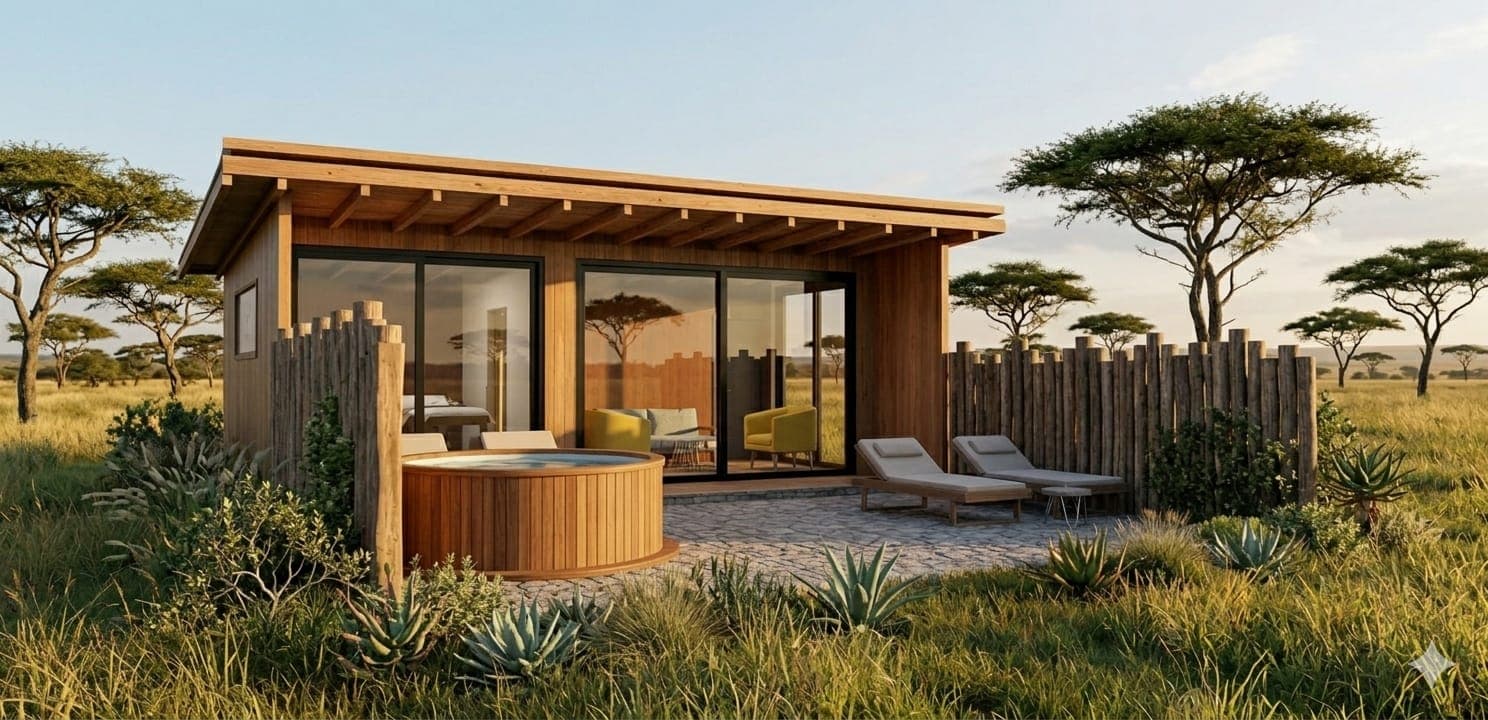
On the deck, looking out over the plain. Heated as required.
For long lunches, late breakfasts, and the kind of afternoon that involves nothing more than a book.
Set up under the deck or under the stars on request.
Stocked to your preference. Tea, coffee and pour-over station included.
Soft natural textures, calm neutral palette, panoramic wilderness views.
Freestanding bathtub, indoor shower, outdoor shower, wellness bathroom kits, and a dedicated dressing area.
King-size luxury bedding, natural calm-textured fitted walls, air conditioning, blackout window treatments.
High-speed Wi-Fi throughout. Easy to drop into a meeting or send a photograph. Easier still to ignore your phone entirely.
Your safari
Each villa is assigned a dedicated private butler, a private safari vehicle and a professional safari guide. The trip moves at the speed of your decisions: a late breakfast, a long sighting, a missed afternoon drive in favour of a nap and a pool.
Guests are free to socialise in the shared spaces — the main lounge, the boma fire, the wellness deck — or to spend entire days inside the villa and on its private deck without ever joining a group. The lodge is built around the assumption that quiet is the central luxury.
Dining
African-inspired cuisine built around fresh seasonal ingredients, farm-to-table sourcing, and fire-cooking as the centrepiece. Long lunches under the deck, bush breakfasts after the morning drive, private dinners on the plain.
Wine and cocktail pairings are curated rather than catalogued — a small list, well chosen, refreshed against the season. Kosher-friendly travel experiences are available on advance request, alongside any other dietary work.
Spa & Wellness
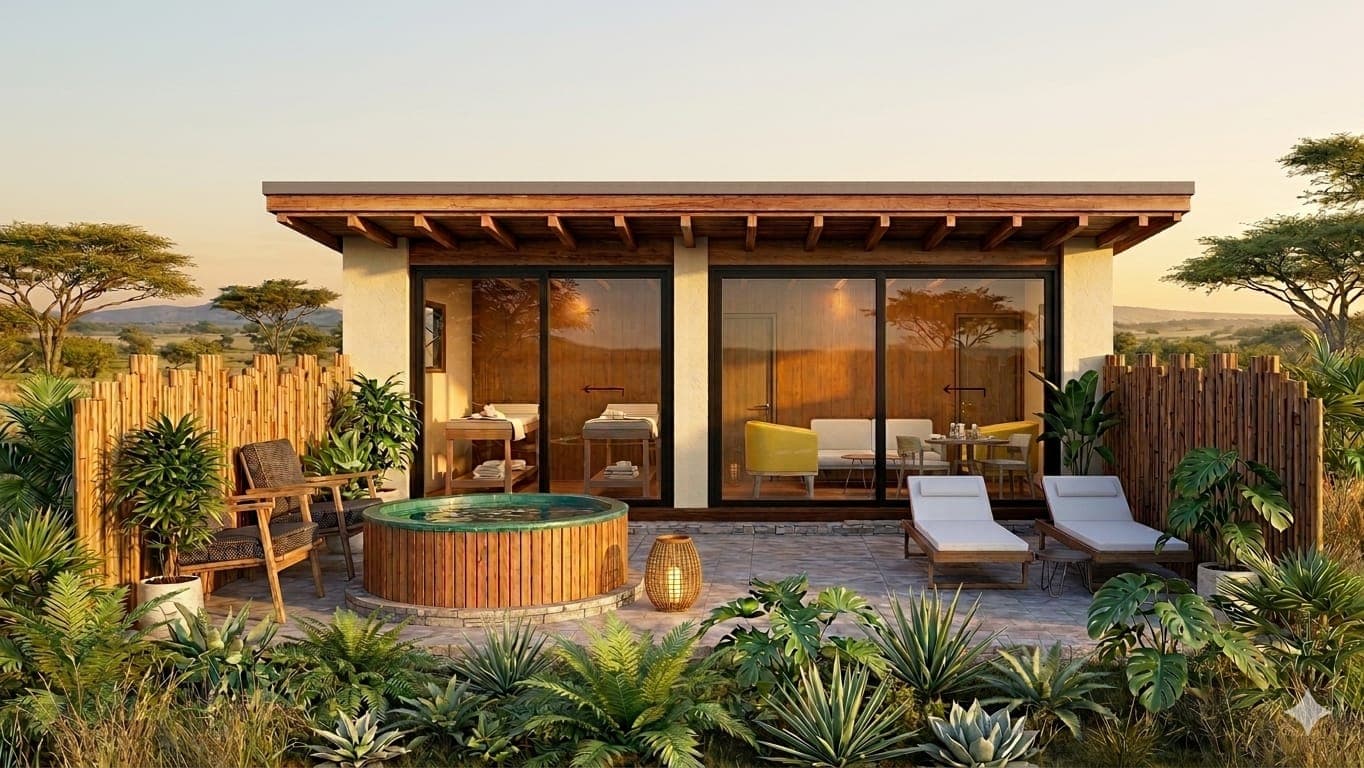
A restorative wellness offering built around stillness, nature and holistic relaxation rather than a busy spa menu. Signature massages, deep-tissue work, couples' treatments, and the option to take any treatment in your villa rather than the spa.
Beyond the treatment room, the lodge has quiet reflection areas, a poolside relaxation deck, yoga and stretching spaces, and a network of running trails that loop the conservancy. Outdoor wellness experiences — sunrise breath sessions, bush-side stretching — can be scheduled at the time of day that suits.
Design philosophy
The lodge architecture combines soft natural materials with African textures and craftsmanship, organised around an open-air living plan with a seamless indoor-outdoor flow. The palette is intentionally calm: deep neutrals, warm earth tones, and the colour of the land outside the window.
Furniture is locally made wherever possible, textiles are commissioned, and the art on the walls is by African artists. Nothing in the villa shouts. The view is the focal point.
How the lodge gives back
Lease fees paid to Lemek Conservancy directly fund anti-poaching, habitat management and predator monitoring.
Long-running partnerships with neighbouring Maasai communities — school sponsorship, clinics, water provision, scholarship programmes.
Programmed visits and apprenticeships between the lodge team and surrounding communities, and the chance for guests to participate.
A team drawn primarily from the surrounding Maasai communities — guides, butlers, kitchen, housekeeping — with formal training and career pathways inside the operation.
Built with natural materials, raised on light footings, designed to be removable. The land takes precedence over the building.
Solar primary power, low-draw appliances, and a battery system sized for the operation rather than the peak load.
Greywater capture, low-flow fittings, careful borehole management, monitored daily during dry season.
Suppliers chosen from a working radius of the lodge wherever possible. Long-term partnerships rather than one-off purchases.
How to get there
Daily flights from Wilson Airport, Nairobi to Mara North Airstrip. Roughly 45 minutes in the air, then 15 minutes by road to the lodge.
Direct charter flights to Mara North Airstrip can be arranged on request. Schedule built around your timing.
On-site helipad. Useful for arrivals, departures and scenic side-trips during your stay.
Approximately 4.5 hours' drive. Recommended only with a specific reason — most guests fly.
Beyond the deck


Need to know
Children
All ages welcome. Family villas can sleep two adults plus three children.
Min stay
3 nights recommended; 2 nights minimum in low season.
Languages
English. Maa and Swahili spoken across the team.
Currency on site
US dollar billing. Major cards accepted. Tipping discretionary.
Power & Wi-Fi
Solar primary, 24-hour power. High-speed Wi-Fi in all villas and shared spaces.
Best time
July–October for migration; January–March for green-season calving and predator action.
Wheelchair access
Two villas with step-free access and roll-in showers. Game drives possible with notice.
Dietary
Kosher, vegetarian, vegan and allergen-aware menus on advance request.
Time zone
East Africa Time (UTC+3). No daylight saving.
Frequently asked
No. Xola Lodge sits in an unfenced section of the Lemek Conservancy and wildlife moves freely through. Guests are escorted to their villas after dark by a trained guide, and night-time movements are coordinated by radio.
While you are here