
Kenya — Region
1,510 km² of open plains, acacia-dotted hills, and the winding Mara River — the stage on which two million animals run, every year, the southern half of a journey older than recorded history.
The Place
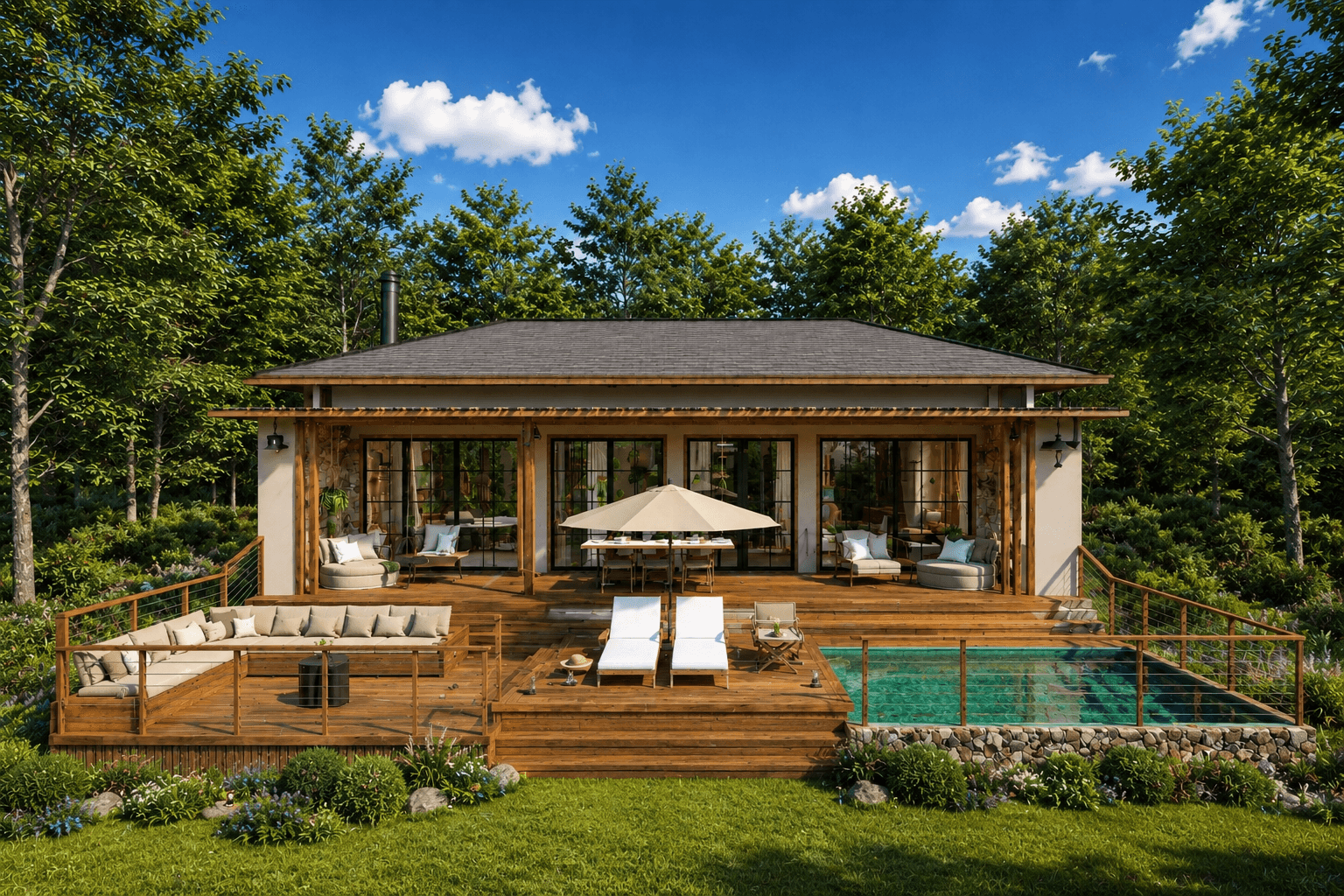
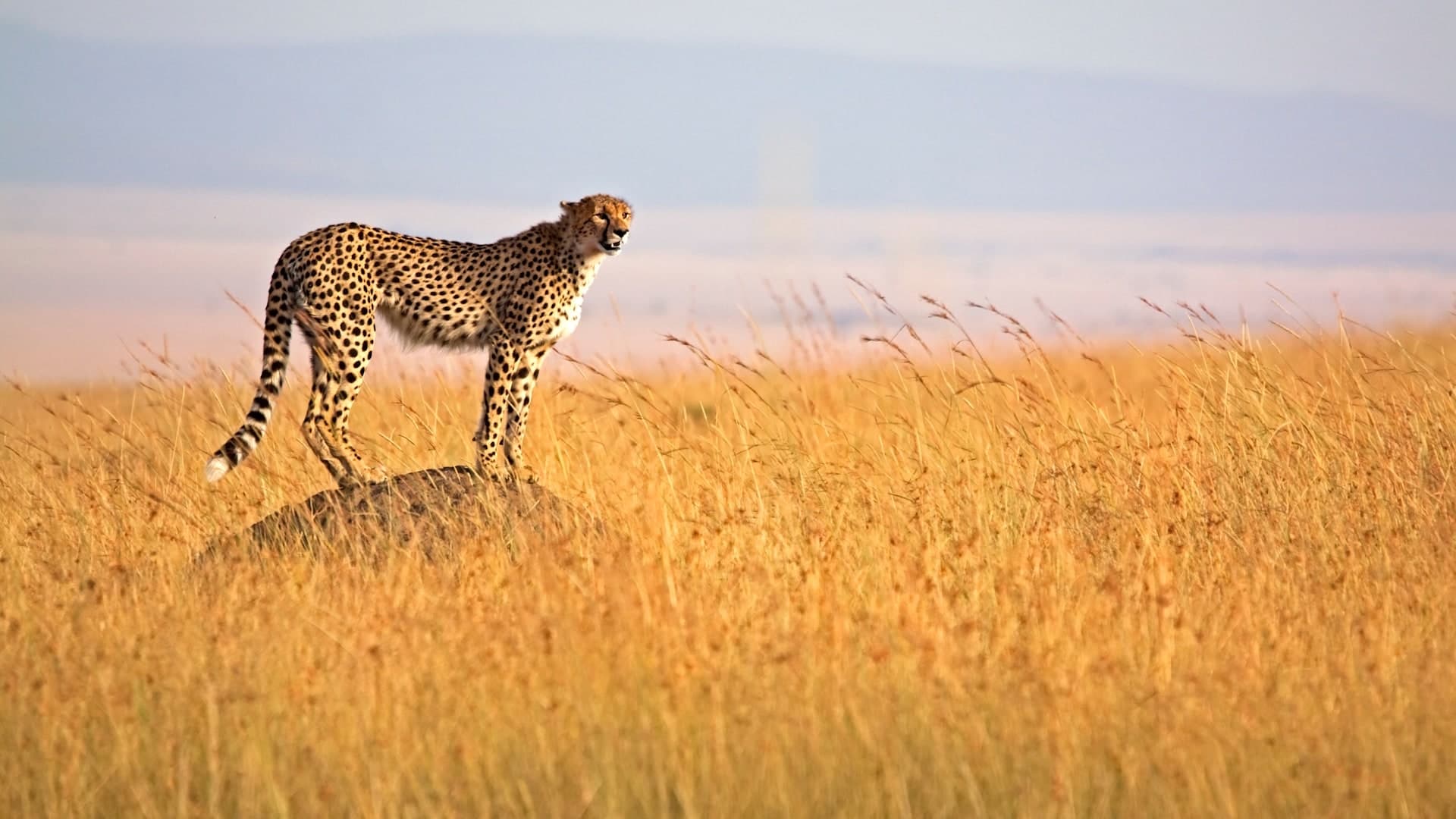
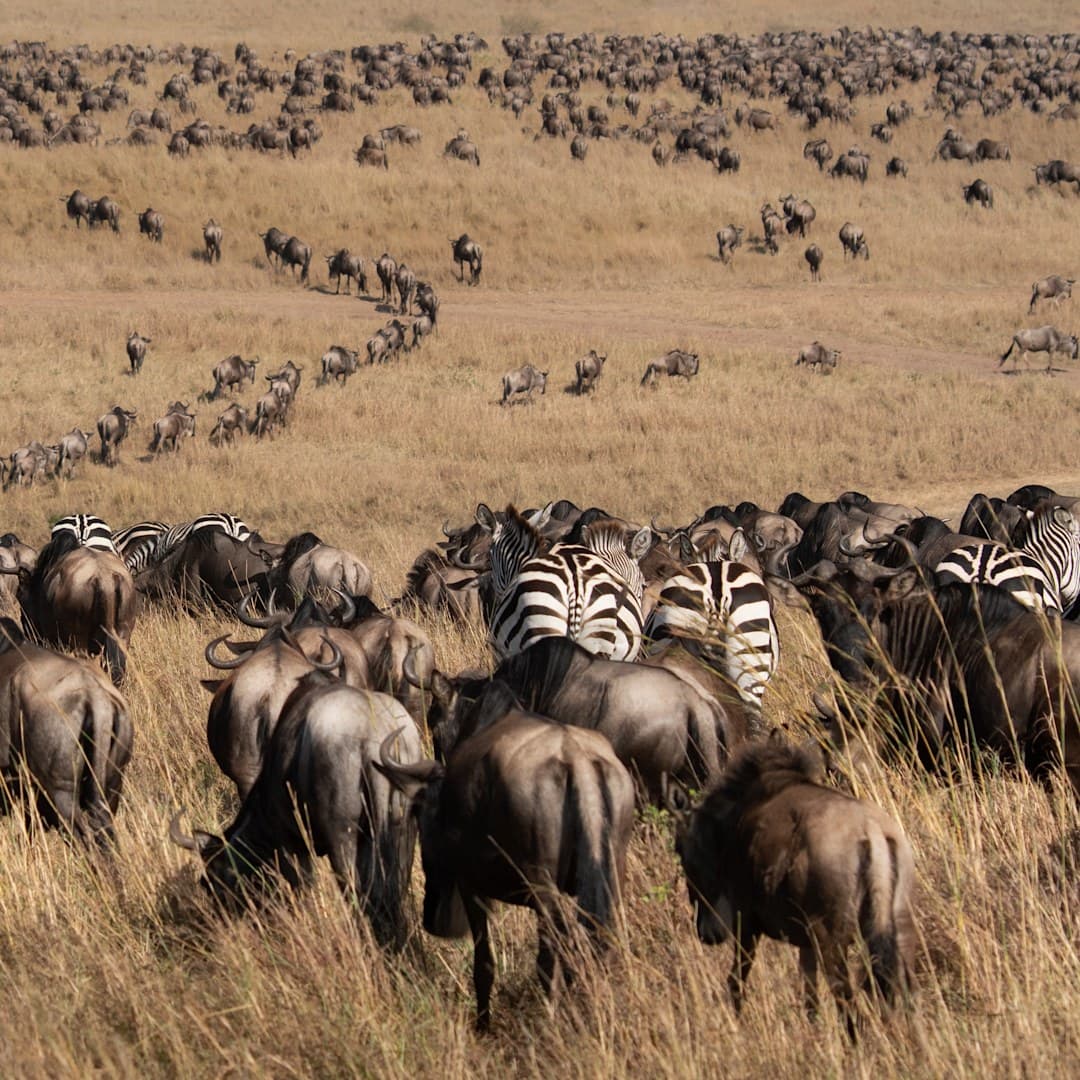
The Masai Mara National Reserve spans 1,510 km² (583 mi²) in Kenya's south-west, forming the northern end of the greater Serengeti–Mara ecosystem. Open plains, riverine forest, and the Oloololo Escarpment frame the country; the Mara River cuts a slow path through the centre. The reserve is home to more than two million wildebeest, zebra and gazelle during the Great Migration, and a year-round congregation of predators and prey. Elephant, lion, giraffe and cheetah are often seen. In the river, hippo wallow while crocodiles wait in the shallows. The Mara holds roughly 95 mammal species and around 470 to 500 bird species — sightings here rarely feel rushed.
The "Mara" beyond the reserve itself is just as important. A patchwork of private conservancies — Mara North, Naboisho, Olare Motorogi, Mara Triangle and others — flanks the public reserve. These are leased from Maasai landowners on revenue-sharing arrangements, and they offer the same wildlife, lower vehicle densities, and the activities (walking, night driving) that the public reserve does not permit.
By the numbers
Experiences
The bread-and-butter of a Mara safari — two drives a day in an open four-wheel-drive with guide and tracker, departing at first light and returning after dark. Big cats are the headline; the Mara is one of the best places on earth to see lion, leopard and cheetah in a single trip.
During the Great Migration months (July to October), full-day expeditions are common — leaving camp early with a packed picnic and following the herds. Bush breakfasts under a shady tree and mobile sundowner bars at day's end are part of the form.
From late July to October, herds of wildebeest pile up against the Mara River and — when the moment comes — plunge across, crocodiles waiting in the shallows. Dust clouds. Predator pursuits.
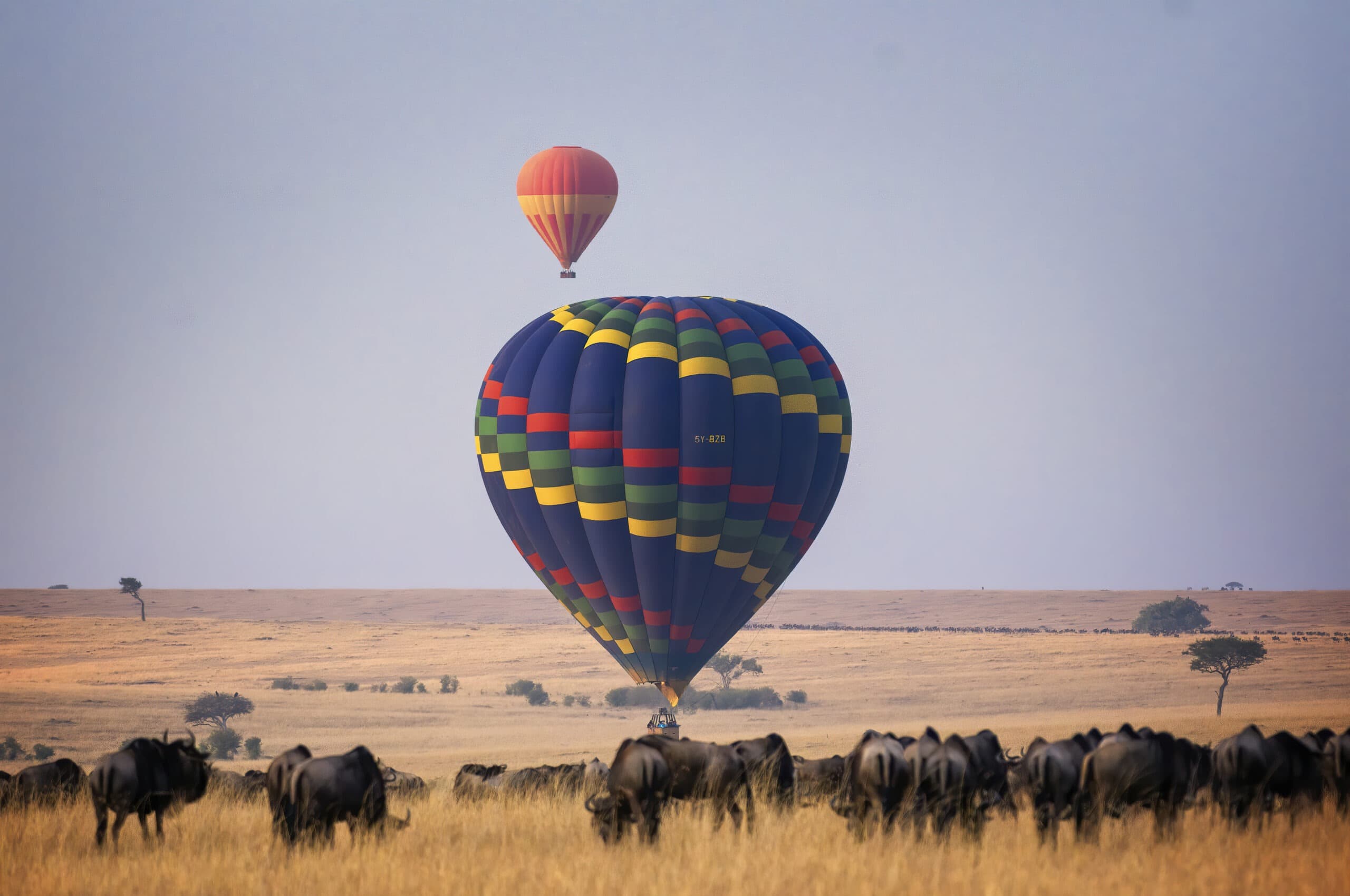
A first-light balloon over the plains, drifting on the early wind across grazing herds, ending with a champagne breakfast on the savanna. Limited daily allocation — worth booking in advance.
The public reserve does not permit walking, but several of the private conservancies do. Three or four hours on foot with an armed guide, focused on the smaller details.
Again, conservancy-only. Spotlit drives after dinner reveal serval, bat-eared fox, aardvark on a lucky night, and the nocturnal mood of the resident predators.
Riding through the plains — sometimes for an afternoon, sometimes for a multi-day point-to-point — at the speed of the grazing herds.
Several camps run programmes with neighbouring Maasai communities — a morning in a manyatta learning daily rhythms, a guided beadwork session, a school or clinic visit.
A remote, exclusive western section of the reserve, managed by the Mara Conservancy. Exceptionally well-protected, noticeably less crowded, and home to resident black rhino.
The Mara was the setting for the BBC's Big Cat Diary. Many of the cats here have been observed by researchers for generations.
The set-piece moments. A breakfast tent under an acacia after the morning drive; a sundowner table laid out on a ridge at the end of the day, gin in hand, the plain going gold below.
The single most consequential choice in a Mara itinerary is whether to stay in the reserve or in one of the surrounding conservancies. The latter caps vehicle numbers, permits walking and night activities, shares revenue with Maasai landowners.
When to go
The Mara is a year-round destination, but the calendar shapes the trip. July to October is the dry season and the migration months — the river crossings happen in this window, vehicle traffic is at its highest, and the grass is short and yellow. November to February is the transition — short rains, lower visitor numbers, and the herds back in Tanzania. March to June is the green season — long rains, lush plains, calving among the resident antelope, fewer guests, and some of the best photography of the year.
If you can only travel in the migration months, choose a conservancy: same wildlife, fewer vehicles. If you can travel either side, the green and transition seasons are quietly excellent and considerably less crowded.
Pair with